
Poor drainage around a patio does more than leave puddles. It weakens the base, stains surfaces, and can push water toward your home’s foundation. Over time, this leads to costly repairs.
The good news is that most drainage issues can be corrected with the right approach. The key is understanding how water moves across your property and fixing the cause, not just the symptom.
This guide explains practical ways to improve drainage around your patio, from simple fixes to long-term solutions.
Why Patio Drainage Problems Should Not Be Ignored
Water that lingers around a patio always has a reason. Ignoring it allows small issues to become structural problems.
Here is what poor drainage can lead to:
- Surface damage such as cracks, shifting pavers, or staining
- Soil erosion under the patio base
- Mould or algae growth that creates slippery surfaces
- Water pooling near your foundation
- Freeze-thaw damage during colder months
A properly designed patio should move water away quickly and consistently. If it does not, something in the system is failing.
Signs Your Patio Has Drainage Issues
Drainage problems are often easy to spot once you know what to look for. These signs usually appear after heavy rain or snow melt, but some can develop gradually over time.
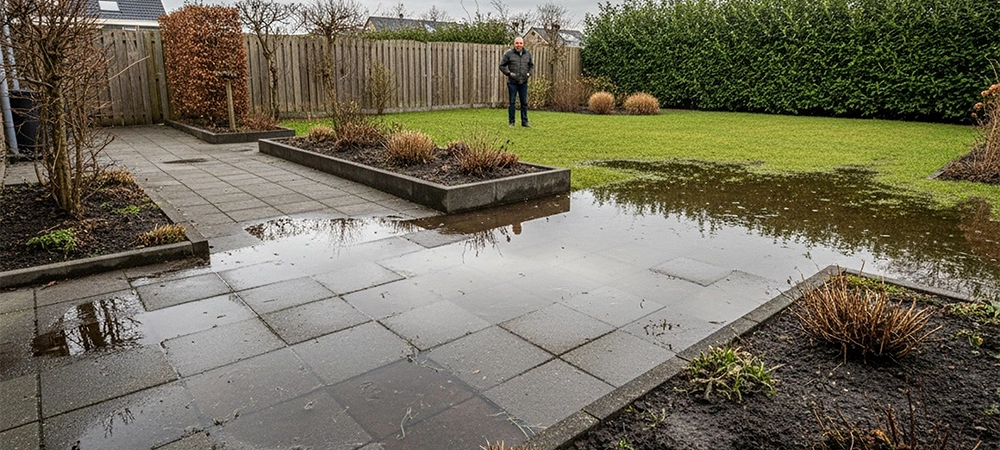
Standing Water That Does Not Drain
Small puddles may seem minor, but they often point to low spots or poor slopes. Over time, standing water can stain surfaces, weaken joints, and increase slip risk.
Water Flowing Toward the House
If you notice runoff heading back toward the house, the grading is likely incorrect. This can lead to moisture buildup near the foundation, which increases the risk of basement leaks or long-term structural issues.
Sinking or Uneven Pavers
Pavers that shift, dip, or feel unstable underfoot are a clear warning sign. This usually means water is getting beneath the surface and washing away the base material.
Green or Dark Patches on the Surface
Algae, moss, or mildew growth often appears as green or dark patches. These areas stay damp longer than the rest of the patio, which signals poor drainage or limited sun exposure.
Erosion Around Edges
If you see soil washing away along the edges of your patio, water is not being properly controlled. Erosion exposes the base and weakens the structure over time. It can also affect nearby landscaping, creating uneven ground and plant damage.
Water Collecting Near Joints or Edges
In some cases, water may not form large puddles but instead gathers along joints or edges. This slow buildup can loosen jointing material and allow water to seep deeper into the base. It is an early-stage issue that often goes unnoticed until damage appears.
Overflow From Nearby Areas
Watch how water behaves beyond the patio itself. If nearby lawns, garden beds, or downspouts direct water toward the patio, the area can become overloaded. Even a well-built patio will struggle if the surrounding drainage is not managed properly.
Related Article: How to Fix Leaking Eavestrough
What Causes Poor Drainage Around a Patio
Drainage issues rarely come from a single cause. Most patios develop problems due to a combination of design and environmental factors.
- Improper Slope or Grading. A patio should slope slightly away from the house. Even a small error in grading can trap water.
- Compacted or Clay Soil. Dense soil prevents water from absorbing into the ground. Instead, water stays on the surface or runs in the wrong direction.
- Poor Base Installation. If the base layer is not properly compacted or lacks the right materials, water can destabilize the structure.
- Blocked Drainage Paths. Debris, leaves, and sediment can clog drainage channels, preventing water from flowing away.
- Downspout Placement. Downspouts that discharge near the patio can overwhelm the area with excess water.
How to Improve Patio Drainage Effectively
Fixing drainage is about guiding water, not fighting it. The goal is to move water away from the patio quickly and safely.
Adjust the Patio Slope
The most important factor in drainage is slope. A patio should have a slight incline away from the house.
- Recommended slope: about 2% (roughly 1/4 inch per foot)
- Ensures water flows naturally off the surface
- Prevents pooling in low areas
If your patio is already installed incorrectly, sections may need to be lifted and re-levelled.
Install a French Drain System
A French drain is one of the most effective ways to manage excess water.
- A trench filled with gravel and a perforated pipe
- Redirects water away from the patio
- Works well in areas with heavy rainfall or poor soil
This system collects water below the surface and carries it to a safe discharge point.
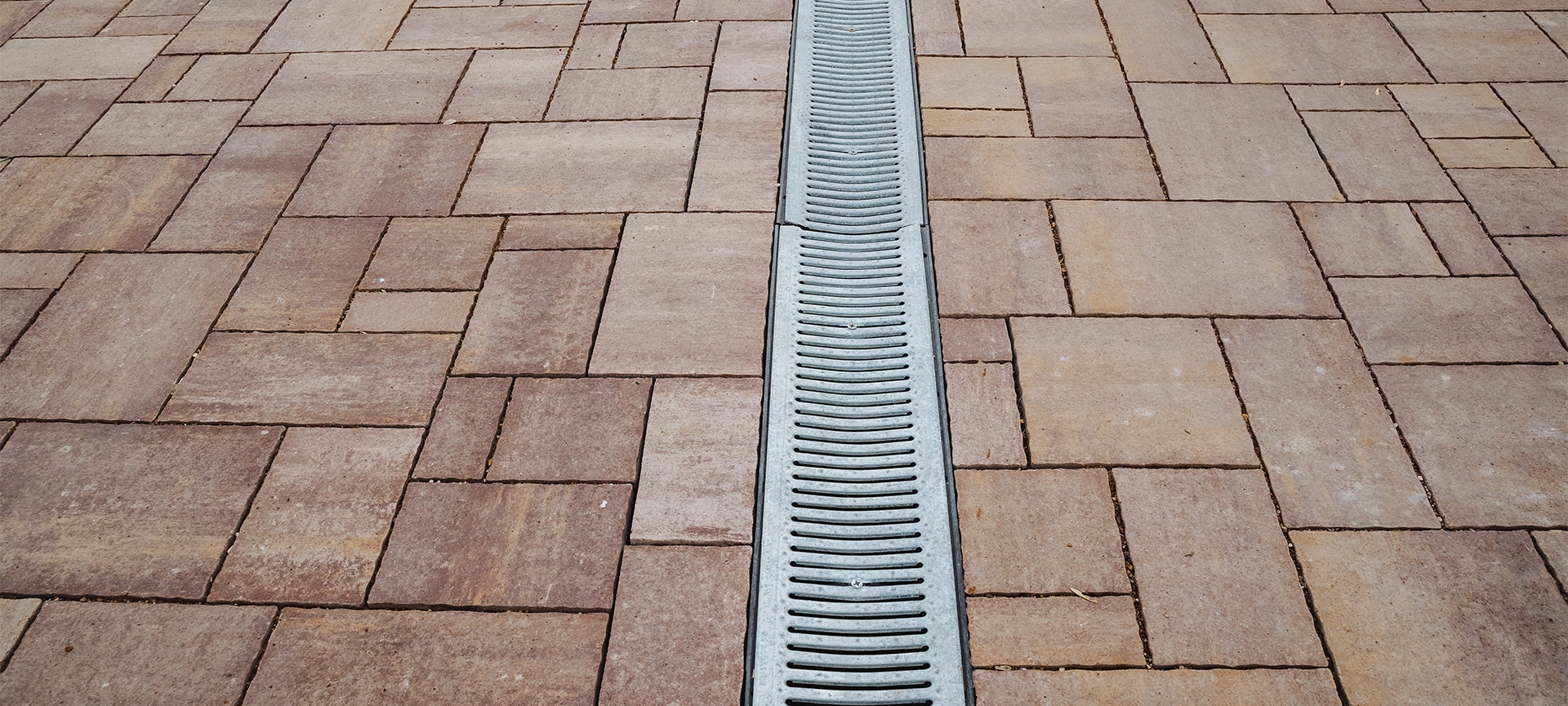
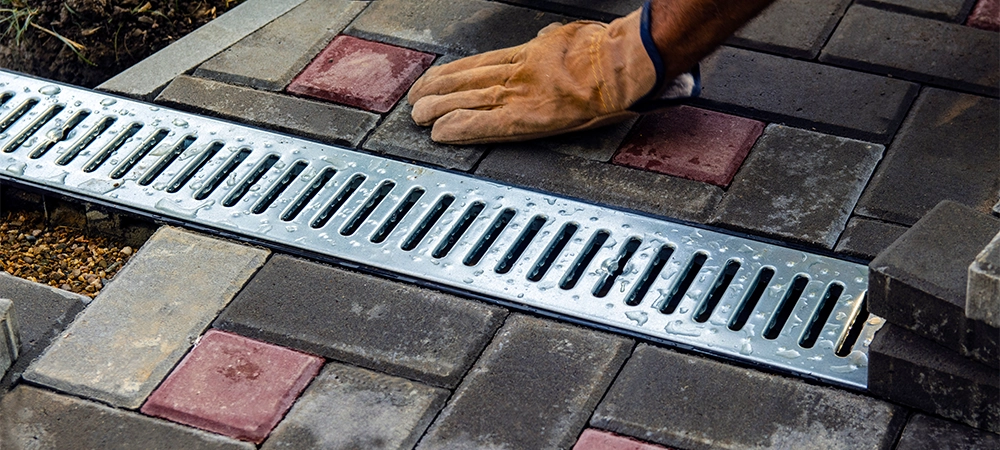
Add a Channel Drain Along the Edge
Channel drains are ideal when water collects along one side of the patio.
- Installed flush with the surface
- Captures water before it spreads
- Directs it into a drainage pipe system
They are especially useful near doorways or transitions between patio and lawn.
Improve Soil Drainage Around the Patio
Sometimes the issue is not the patio itself but the surrounding soil.
To improve soil drainage:
- Add organic matter to break up compacted soil
- Use gravel or sand to increase permeability
- Avoid overwatering nearby garden beds
Better soil structure helps absorb water before it reaches the patio.
Extend or Redirect Downspouts
Downspouts often discharge too close to patios, creating constant water exposure.
Simple fixes include:
- Adding downspout extensions
- Redirecting water toward a drainage area
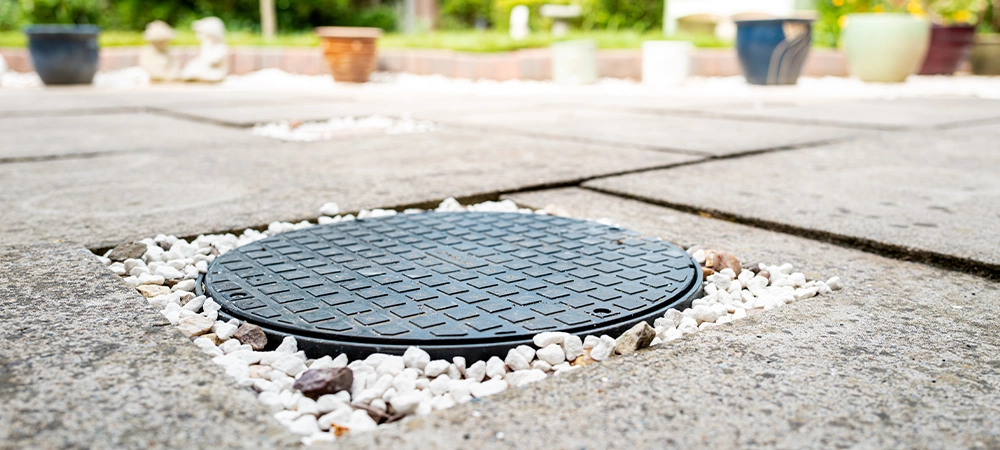
- Connecting downspouts to underground drainage pipes
This prevents water from pooling where it should not.
Seal Gaps and Joints
For interlocking pavers, gaps between joints can allow water to penetrate unevenly.
- Refill joints with polymeric sand
- Ensure proper compaction
- Seal surfaces where appropriate
This helps control how water moves across and through the patio.
Build a Dry Creek Bed or Swale
For properties with natural slope issues, landscaping solutions can help redirect water.
- A dry creek bed guides water visually and functionally
- A swale (shallow trench) redirects runoff
- Both blend into landscape design
These options are effective and add visual appeal at the same time.
Related Article: How to Stop Ice Build-Up in Eavestrough
When DIY Fixes Are Not Enough
Some drainage issues require more than surface adjustments. If water problems persist, it is likely a structural issue.
You should consider professional help if:
- Water flows toward your home consistently
- The patio is sinking or shifting
- Drainage solutions have already failed
- There is visible erosion or foundation risk
A professional assessment ensures the problem is solved at its source.
Why Professional Drainage Solutions Matter
Drainage is not just about adding a drain. It requires proper planning, grading, and installation.
Working with experts like Green Side Up Contracting ensures:
- Accurate grading and slope correction
- Proper base preparation for long-term stability
- Integrated drainage systems that work with your landscape
- Solutions tailored to your property layout
Professional landscaping improves both function and property value by preventing future issues.
Preventative Maintenance for Patio Drainage
Once drainage is fixed, maintenance keeps it working.
Simple steps include:
- Clearing debris from drains and channels
- Checking for low spots after heavy rain
- Inspecting joints and sealing when needed
- Ensuring downspouts remain clear and properly directed
Regular upkeep prevents small issues from returning.
Related Article: Solving Yard Drainage Issues Before Landscaping Begins
Fix Drainage Before It Costs More
Drainage problems rarely stay the same. They either improve with action or worsen over time.
If your patio shows signs of water issues, addressing them early protects your investment and prevents structural damage.
Green Side Up Contracting offers expert patio and landscape solutions across the Greater Toronto Area. From grading adjustments to full drainage system installation, their team ensures your outdoor space stays functional and durable.
Book a consultation today and get a clear plan to fix your patio drainage the right way.
Frequently Asked Questions
How much slope should a patio have for proper drainage?
A patio should slope about 1/4 inch per foot away from the house. This slight angle is enough to move water without affecting usability or comfort.
Can I fix patio drainage without removing the patio?
Minor issues like clogged drains or poor soil can be fixed without removal. However, incorrect slope or base failure often requires lifting and reinstalling sections.
What is the best drainage solution for heavy rain areas?
French drains and channel drains work well together in high rainfall areas. They manage both surface and subsurface water effectively.
How do I know if my patio base is failing?
Signs include sinking pavers, uneven surfaces, and recurring water pooling. These indicate that water has weakened the foundation underneath.
Are drainage systems expensive to install?
Costs vary based on the solution. Simple fixes like downspout extensions are affordable, while full drainage systems require more investment but offer long-term value.
Will better drainage increase property value?
Yes. Proper drainage protects your home, improves usability, and enhances curb appeal, all of which contribute to higher property value.