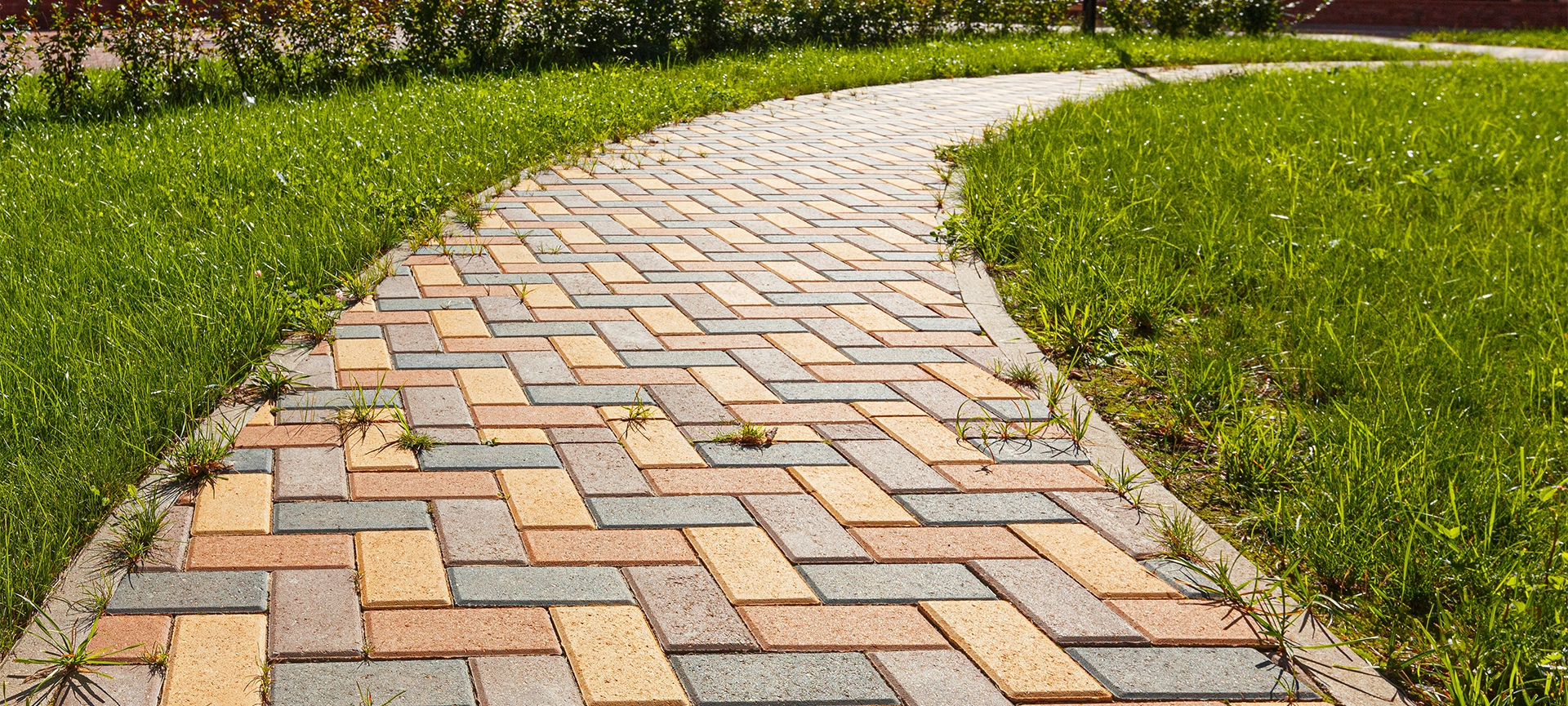

Interlock ages in predictable stages. Some problems stay close to the surface and can be corrected quickly. Others signal a deeper base failure that simple repairs cannot fix.
Understanding the difference helps you choose the right solution for your driveway, walkway, or patio. Many homeowners also use this moment to explore additional upgrades, especially when planning larger landscaping work with Green Side Up Contracting.
Interlock issues usually reveal themselves gradually. Stones shift, edges loosen, and dips appear after freeze–thaw cycles. These signs help determine whether repair will restore stability or whether a full replacement offers better long-term value.
Interlocking is a core part of Green Side Up’s hardscaping services, which include full repairs, replacements, and foundation rebuilds that keep outdoor surfaces performing well.
Related Article: Top 3 Outdoor Upgrades Before Winter Hits
How Interlock Typically Wears Down
Interlock relies on three layers: the pavers, the bedding layer beneath them, and the compacted base. When the base weakens, movement travels upwards. Before deciding between repair and replacement, it helps to understand where the issue begins.
Surface-Level Issues
These affect only the stones or the bedding layer. Typical signs include light settlement, worn joint sand, loose edging, or mild weed growth. These problems are correctable without rebuilding the base.
Structural-Level Issues
These point to deeper failure under the pavers. Severe sinking, heaving, pooling water, and widespread shifting fall into this category. Repair attempts in these cases rarely last because the foundation can no longer support the surface.
Related Article: When Should You Seal Interlocking Driveways After Installation?
When Repair Makes Sense
Repairs are practical when the interlock layout is stable, and the base still performs well. The focus remains on resetting stones, correcting small dips, and restoring the surface.
Light Settlement
Minor dips often form after winter. These areas can be lifted, supplemented with a fresh bedding layer, and reinstalled. As long as the surrounding ground shows no major movement, repair is enough.
Joint Sand Refill
Joint sand protects pavers from shifting and discourages weed growth. Over time, it washes out due to rain and foot traffic. Re-sanding strengthens the surface and improves appearance. This is one of the most cost-effective ways to bring interlock back to life.
Loose Edging
If only one portion of the edging has shifted, a simple reset will stop further spreading. The rest of the structure stays untouched, making this a fast, low-impact fix.
Surface Cleaning
Rust, organic stains, and mildew can be treated with professional cleaning. This restores appearance without disturbing the stones. Homeowners often book cleaning before re-sanding to give the surface a refreshed, uniform look.
Spot Repairs
Small cracks or broken pavers caused by dropped objects or isolated pressure points can be swapped without affecting the rest of the area.
Repairs work best when problems are contained. Once multiple areas sink or shift, the underlying structure becomes more important than surface appearance.
Related Article: Reasons We Recommend Interlocking Patios Over Decking in 2024
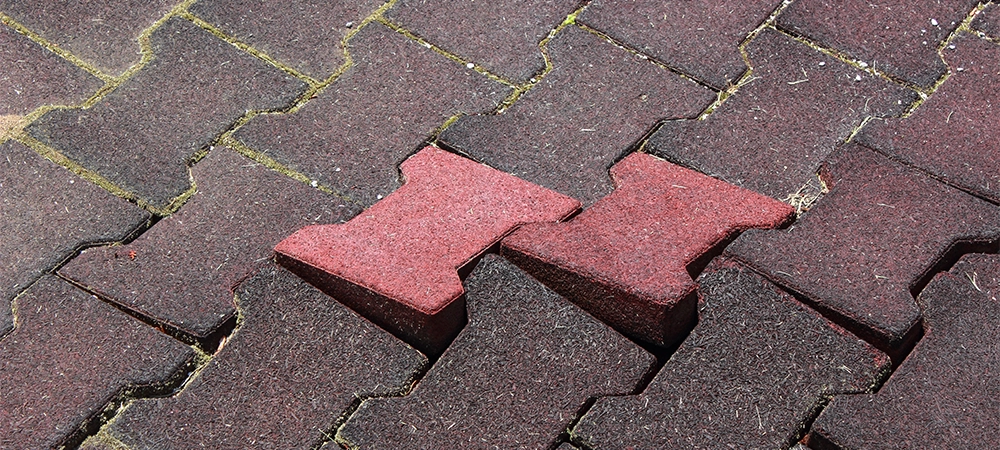
When Replacement Is the Better Choice
Replacement is recommended when structural problems spread across the surface. At this stage, the foundation no longer supports the weight of vehicles, foot traffic, or seasonal freeze–thaw cycles.
Widespread Sinking or Heaving
Large dips, lifted sections, and shifting pavers indicate the base has settled unevenly or washed out. Rebuilding the foundation is the only way to stop the cycle of repeat repairs.
Drainage Problems
If water pools, flows toward the house, or consistently freezes in the same area, the slope is incorrect. Repairs cannot fix grading issues. Replacement allows the install team to regrade the entire area to restore safe drainage.
Old or Outdated Pavers
Pavers from older installations may fade, wear down, or lose structural shape. Replacement restores the look of the area and brings installation standards up to today’s performance expectations.
Incorrect Original Installation
If the initial contractor used thin base layers or skipped proper compaction, failure is inevitable. Replacing the interlock ensures the new foundation is deeper, denser, and built with the correct materials.
Persistent Recurring Issues
When the same dips return every year, the base has reached its limit. Replacement prevents ongoing maintenance costs and delivers a more stable surface.
How to Compare Costs
Repair
- Lower short-term cost
- Ideal for small areas or new issues
- Works when the base remains strong
- No major disruption to the surrounding landscaping
Replacement
- Higher upfront cost
- Provides long-term structural stability
- Corrects drainage flaws and grading
- Updates the look of the space
- Ensures uniform performance across the full layout
Many homeowners choose replacement when they expect to stay in their home long term. Those planning a larger outdoor renovation often combine replacement with new landscaping, deck construction, or updated edging to create a unified finish with Green Side Up Contracting’s wider services.
How to Know Which Option Fits Your Interlock
Use this quick breakdown to decide:
- Check stability. If the affected area is small and isolated, repair is effective. If movement spreads across multiple zones, replacement offers more value.
- Observe drainage. Standing water or an incorrect slope means the base must be rebuilt.
- Look for patterns. If you repair the same spots each year, the foundation is failing.
- Consider age. Older installations may need replacement simply due to material wear.
- Assess your plans. Repairs work for short-term needs. Replacement makes sense when planning long-term improvements.
A professional assessment is the best way to confirm what your interlock truly needs. Green Side Up Contracting evaluates the full structure, including slope, base depth, and surface movement, before recommending the right approach.
Deciding on the Solution That Lasts
The right choice depends on where the problem begins. Surface-level issues lean toward repair. Structural movement, poor drainage, and aging pavers point to replacement. Choosing correctly protects your investment and helps your outdoor space stay safe, attractive, and easier to maintain.
Ready for expert help? Green Side Up Contracting provides interlock repairs, full replacements, and complete outdoor upgrades. Book your free estimate today.
Frequently Asked Questions
How do I know if my interlock base has failed?
A failing base usually causes widespread sinking, uneven patterns, or pooling water. These signs appear in more than one area and continue to grow season after season. When the foundation shifts, surface repairs rarely last. A full assessment helps confirm whether the issue is structural or surface-level.
Can I repair the interlock during winter?
Repairs are limited in winter because the ground freezes and moisture affects compaction. Light patching may be possible, but structural work should wait for warmer months. Planning ahead allows crews to schedule repairs or replacements early in the season before demand increases.
Does replacing the interlock improve drainage?
Yes. Replacement allows the installer to rebuild the base and correct the slope. Proper grading directs water away from the home and prevents pooling that leads to ice hazards or foundation pressure. Many homeowners replace interlock specifically to solve long-standing drainage issues.
How long does a repaired interlock usually last?
If the base is stable, repairs can last several years. The longevity depends on foot traffic, vehicle weight, weather conditions, and how well the area sheds water. When repairs fail quickly or the same spot sinks again, it usually signals base deterioration rather than a surface issue.
Is replacement worth it if my interlock still looks good?
Interlock can appear fine on top while the base slowly fails underneath. If you notice repeated sinking, pooling water, or shifting that keeps returning, replacement becomes the more cost-effective choice. It prevents ongoing repair cycles and supports better performance over time.
Can I switch to a new interlock style during replacement?
Yes. Replacement is a good opportunity to upgrade paver style, colour, shape, or layout. Many homeowners use this chance to modernize the design or match other planned upgrades, such as fencing, decks, or landscaping features.
Will weeds come back after repairs?
Weeds grow when the joint sand thins out or washes away. Re-sanding helps reduce growth, but ongoing maintenance is still important. Proper joint sand and regular cleaning keep weeds from settling into the gaps and help maintain the surface.