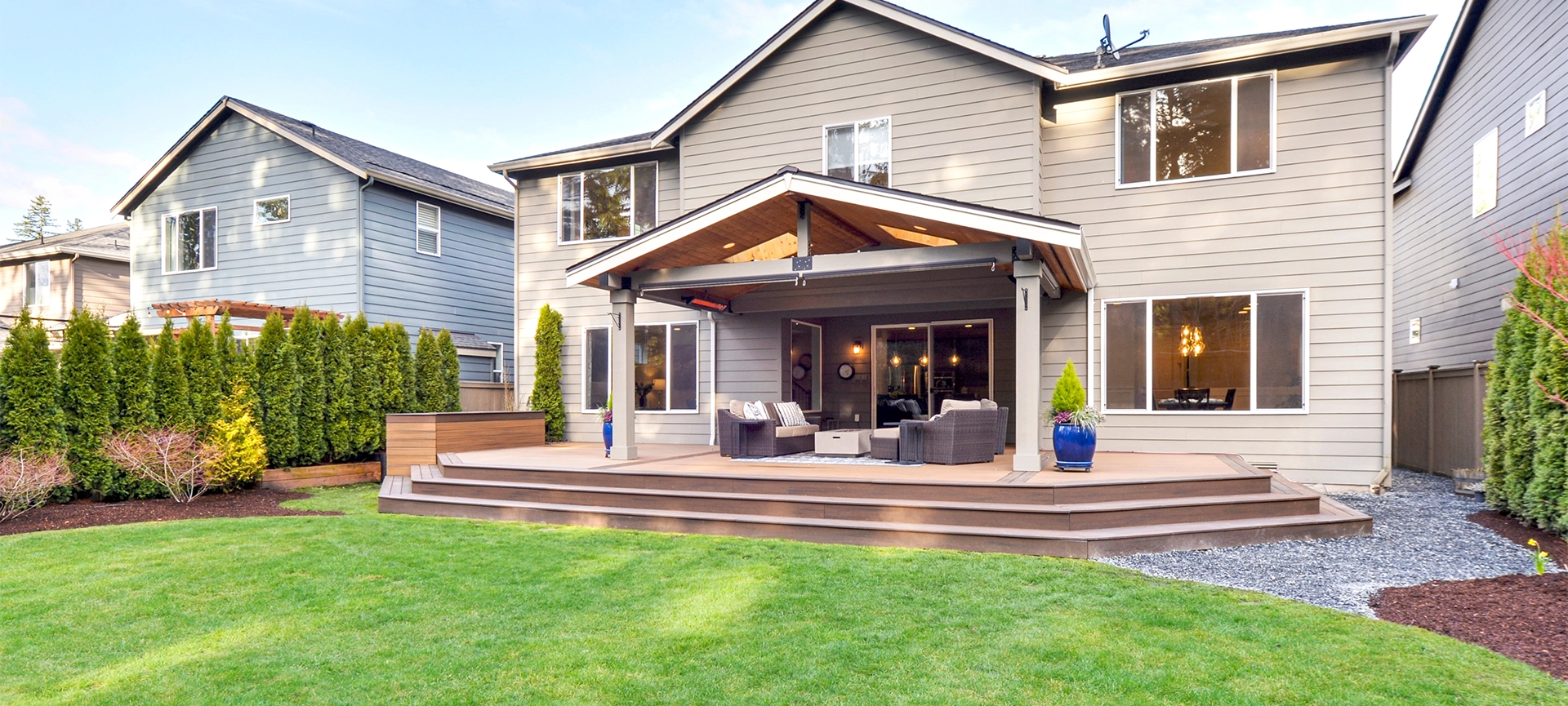

Landscaping can transform a property, but drainage problems can quickly undo even the best design. Standing water, soggy soil, and erosion often point to deeper issues beneath the surface.
Fixing yard drainage issues before landscaping begins protects your investment. It ensures patios, gardens, lawns, and outdoor structures stay stable and healthy over time.
Many homeowners focus on plants, paving, and layout first. Yet proper drainage should always come earlier in the process. When water flows correctly through the yard, every landscape feature performs better and lasts longer.
Professionally planned drainage solutions are often part of a complete outdoor project. Companies like Green Side Up Contracting work with homeowners to assess soil conditions, grading, and water movement before building decks, fences, or full landscape layouts.
Related Article: 10 Ideas for Increasing Your Property’s Curb Appeal in Toronto
Why Drainage Must Be Addressed Before Landscaping
Water always follows gravity. If the yard slopes incorrectly or the soil cannot absorb water, landscaping elements may suffer.
Drainage problems can lead to:
- Water pooling on lawns
- Soil erosion around garden beds
- Paver patios shifting or sinking
- Plant roots drowning in wet soil
- Foundation moisture near the home
When landscaping is installed on top of drainage problems, repairs become far more expensive later.
Correct drainage ensures that:
- Hardscape remains level and stable
- Plants grow in healthy soil conditions
- Water flows safely away from the home
- Outdoor spaces stay usable after rainfall
Addressing drainage early creates a strong base for the entire landscape design.
Common Signs of Yard Drainage Problems
Drainage problems rarely appear all at once. In many cases, they develop gradually and become visible after heavy rain or during the spring thaw when the soil is saturated.
Watching how water behaves across the yard is one of the simplest ways to identify early issues. Certain patterns almost always point to poor drainage beneath the surface.
Here are the most common signs homeowners notice.
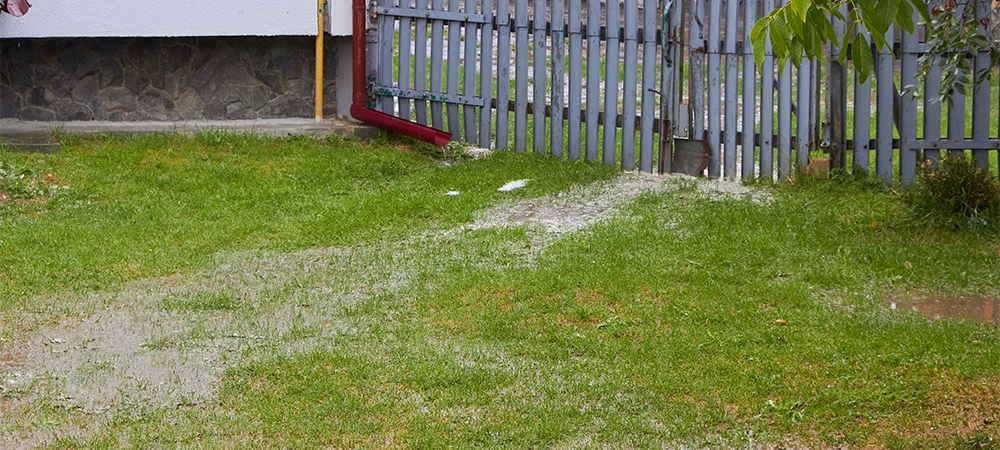
Standing Water
Puddles that remain long after rainfall usually indicate that water has nowhere to go.
This may happen when the yard contains low spots or when the soil has become compacted and cannot absorb moisture efficiently. Even shallow puddles should not be ignored. Over time, repeated pooling can weaken soil structure and damage nearby landscaping features.
If water regularly sits in the same location, grading or drainage installation may be required.
Soil Erosion and Washed-Out Areas
Water that moves too quickly across the yard often creates visible erosion channels.
You may notice:
- Bare soil appearing along slopes
- Mulch or soil washed away from garden beds
- Small trenches forming in lawn areas
- Roots becoming exposed near plants or trees
These signs indicate that runoff is concentrating in one path rather than dispersing evenly across the yard.
Without correction, erosion can slowly reshape the landscape and destabilize planting areas.
Soggy Grass or Patchy Lawn Growth
Grass needs balanced moisture levels to grow properly. When the soil remains saturated for long periods, the root system struggles to access oxygen.
This often results in:
- Thin or yellowing grass
- Muddy areas that remain soft underfoot
- Moss growth replacing turf in shaded areas
If parts of the lawn never seem to dry out, the soil may require drainage improvements or structural amendments.
Water Flowing Toward the House
One of the most serious drainage problems occurs when water flows toward the home instead of away from it.
Improper grading or blocked runoff paths can cause rainwater to collect near the foundation. Over time, this may contribute to basement moisture, foundation stress, or damage to nearby landscaping structures.
A properly graded yard directs water away from buildings and into safe drainage routes.
What Causes Yard Drainage Issues
Drainage problems rarely stem from a single issue. Instead, several site conditions usually combine to create poor water movement.
Identifying the underlying cause helps determine the most effective solution before landscaping begins.
Poor Yard Grading
Grading refers to the slope of the ground across the property.
When the surface forms low pockets or slopes toward structures, water collects rather than draining naturally. These low areas often become persistent puddles after rain.
Correct grading ensures water gradually flows away from the home and toward designated drainage areas.
Heavy Clay Soil
Many properties across the Greater Toronto Area contain clay-based soil. Clay particles are tightly packed, which slows water absorption.
As a result:
- Rainwater drains slowly
- Surface pooling becomes common
- Lawns remain saturated for extended periods
Soil amendments or drainage systems are often required to improve water movement in clay-heavy yards.
Blocked Natural Drainage Paths
Landscaping features, fences, or construction work may unintentionally interrupt the natural path that water once followed.
For example:
- Raised garden beds may block runoff flow
- Fencing can redirect water into new areas
- Compacted soil from construction equipment can prevent absorption
When natural water pathways are blocked, runoff tends to accumulate in the nearest low area.
Downspout Discharge Problems
Roof runoff can release large volumes of water during heavy rainfall.
If downspouts discharge too close to the home, the surrounding soil becomes saturated quickly. This excess water may then spread into lawns, gardens, or foundation areas.
Extending downspouts or connecting them to drainage pipes helps redirect water away from sensitive areas.
Effective Solutions for Yard Drainage
Once the source of the drainage issue is identified, several techniques can restore proper water movement. Many projects combine multiple solutions to address both surface water and underground flow.
Regrading the Yard
Regrading reshapes the slope of the yard to guide water away from structures and toward drainage zones.
This process may involve:
- Adding soil to low areas
- Reshaping slopes around patios or lawns
- Creating gradual drainage pathways
Correct grading is often the first step before installing new landscaping elements.
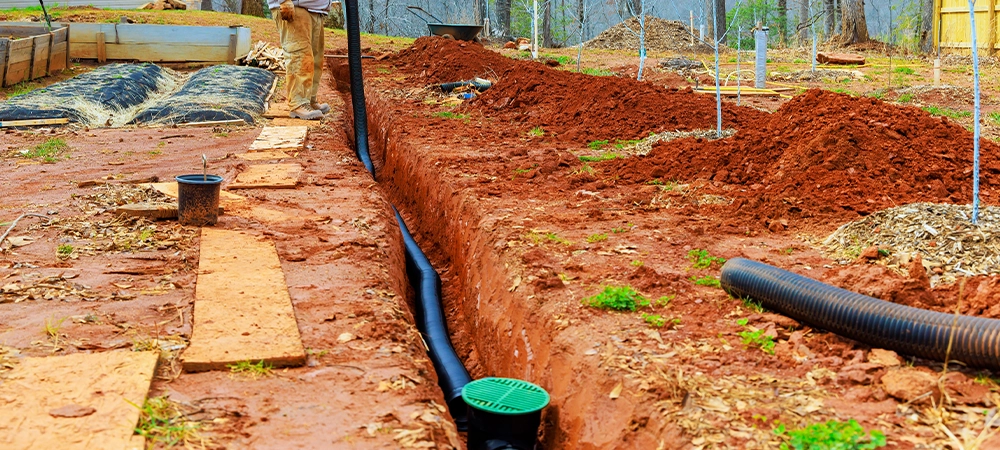
Installing French Drains
A French drain is one of the most reliable solutions for persistent water accumulation.
It consists of a perforated pipe placed inside a gravel trench beneath the soil surface. As water collects in the soil, it enters the pipe and moves safely away from the yard.
French drains are particularly effective in lawns where water repeatedly pools after rainfall.
Building Dry Creek Beds
Dry creek beds provide both drainage control and visual appeal.
These shallow channels are filled with decorative stone and designed to guide excess water through the landscape during storms. When dry, they resemble a natural feature that enhances the garden layout.
They are commonly used in areas where runoff flows naturally downhill.
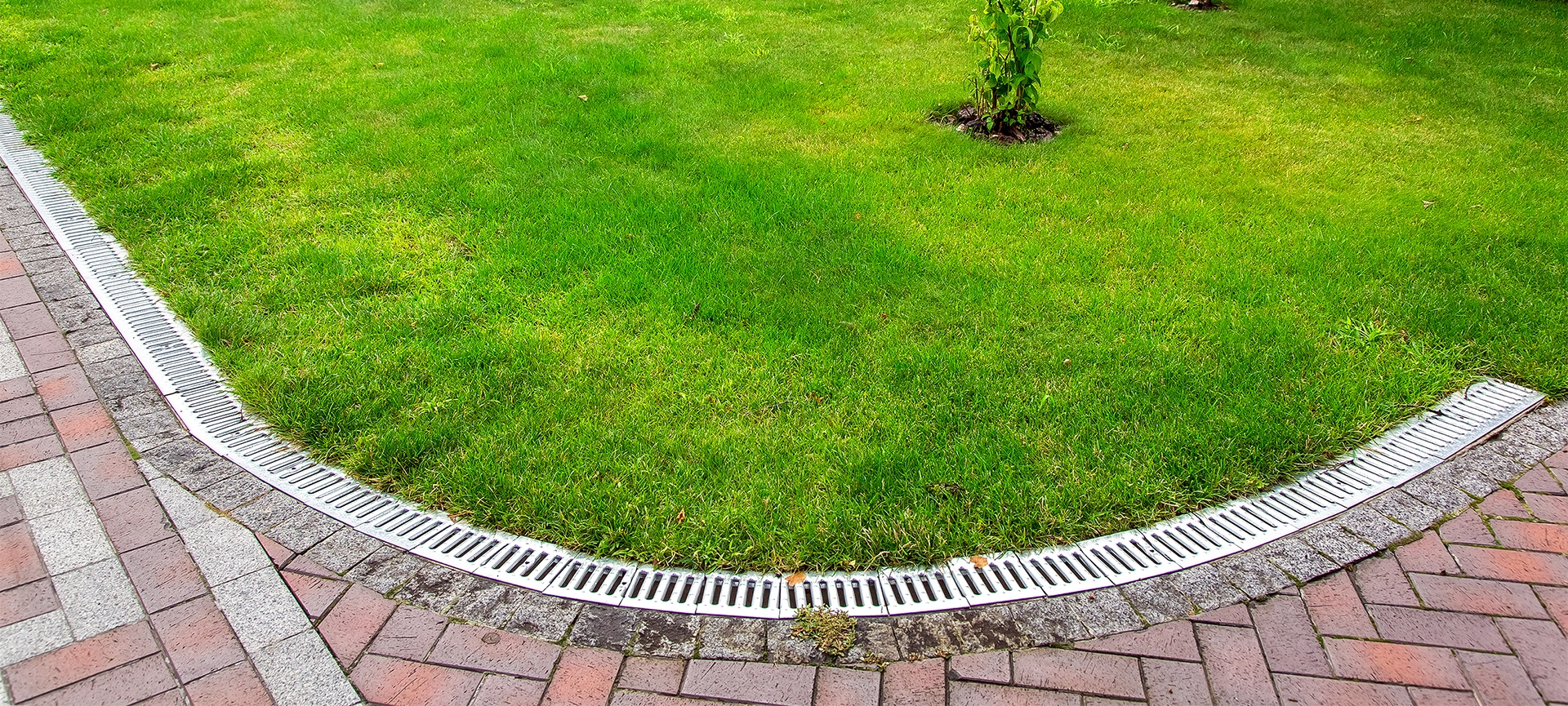
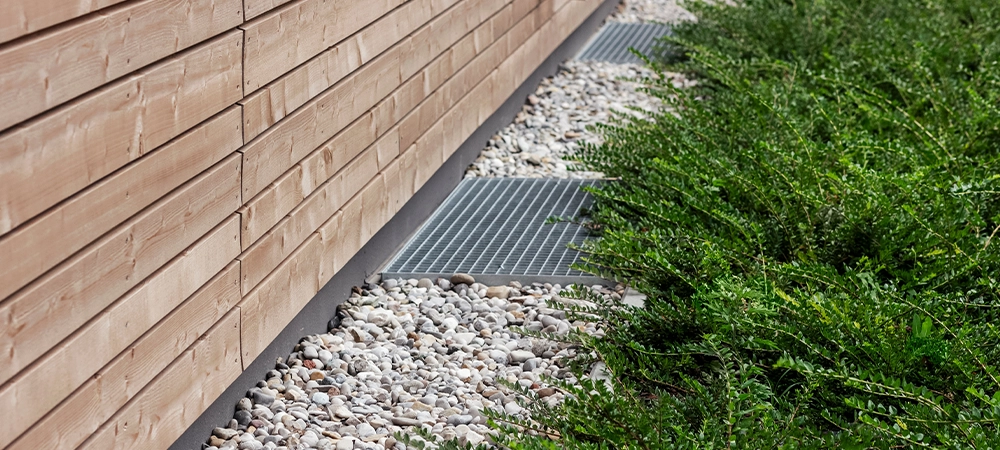
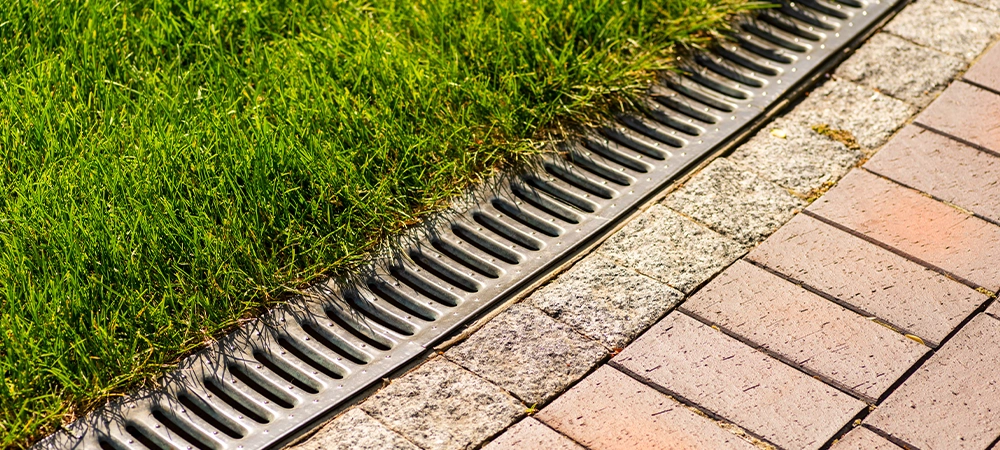
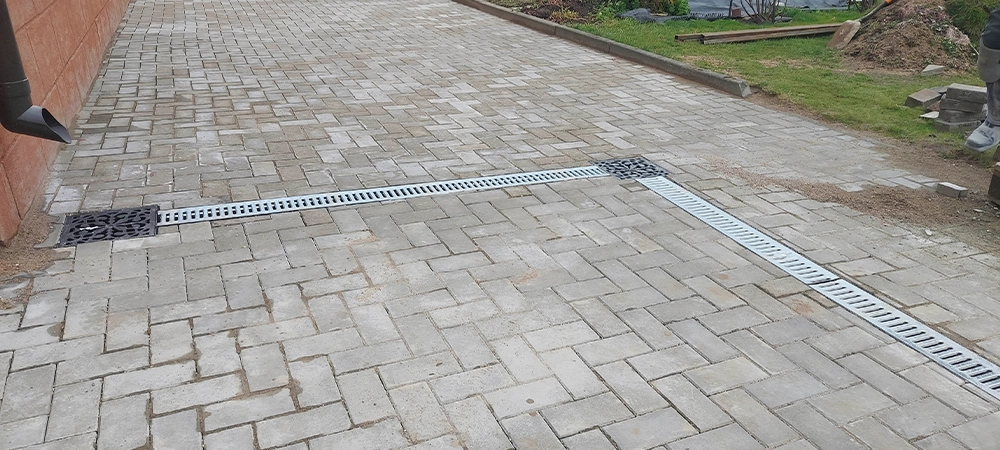
Adding Catch Basins
Catch basins collect water at specific low points in the yard.
Surface water enters the basin through a grate and then travels through underground pipes toward a safe discharge area. These systems are often installed near patios, driveways, or lawn depressions where runoff collects.
Improving Soil Drainage
In some cases, improving soil structure can reduce minor drainage problems.
This may include mixing materials such as:
- Compost
- Sand
- Organic matter
These additions create better soil texture and allow water to move through the ground more efficiently.
Related Article: When to Start Planning Your Landscape Project
How Drainage Planning Supports Landscape Design
Proper drainage planning improves the performance of every landscape element.
For example:
- Patios remain level when the base stays dry
- Garden beds avoid root rot when water drains properly
- Turf areas remain usable after rain
- Deck foundations stay stable in shifting soil
When drainage is solved early, landscaping work becomes easier and more durable.
Professional landscape contractors often include drainage analysis during the planning stage. This approach ensures the design works with the natural slope of the property rather than against it.
Related Article: Landscape Regrets You’ll Avoid with a Professional Contractor & Design Plan
When to Call a Landscaping Professional
Some drainage fixes can be simple. Others require professional equipment and design expertise.
Consider calling a professional when:
- Water repeatedly pools in the same area
- Yard grading slopes toward the home
- Landscaping projects involve patios, decks, or retaining walls
- Drainage pipes or systems need installation
Experienced contractors evaluate the entire property before recommending solutions.
Green Side Up Contracting provides landscaping, fencing, and outdoor construction across the GTA. We design projects that improve both drainage and outdoor functionality. Early planning prevents costly repairs later and allows the landscaping project to proceed smoothly.
Build Outdoor Spaces On a Solid Foundation
Every successful landscape begins below the surface.
Drainage planning protects patios, gardens, lawns, and structures from long-term water damage. By addressing yard drainage issues before landscaping begins, homeowners create outdoor spaces that stay functional and attractive for years.
If your yard experiences pooling water, soggy soil, or erosion, a professional evaluation can reveal the right solution. Fix the water flow first, then build the landscape on stable ground.
Contact Green Side Up Contracting to discuss drainage solutions and landscaping plans for your property.
Frequently Asked Questions
How do I know if my yard has drainage problems?
Signs include standing water after rain, soggy soil, erosion channels, and areas where grass struggles to grow. Water flowing toward the house is another common warning sign.
Can landscaping fix drainage issues?
Some landscaping features help manage water, but drainage problems should be solved first. Installing patios or planting beds without fixing drainage may cause future damage.
What is the most common yard drainage solution?
Regrading the yard and installing French drains are among the most common solutions. These methods redirect water away from problem areas and prevent pooling.
Does poor drainage affect plant health?
Yes. Plants need balanced soil moisture. Excess water removes oxygen from the soil and can cause root rot, leading to weak growth or plant death.
Are drainage solutions expensive?
Costs vary depending on the severity of the issue. Simple grading or downspout extensions are relatively affordable, while larger drainage systems may require more investment.
Should drainage be fixed before installing patios or decks?
Yes. Hardscape features rely on stable ground conditions. Fixing drainage first prevents shifting, cracking, and long-term structural issues.