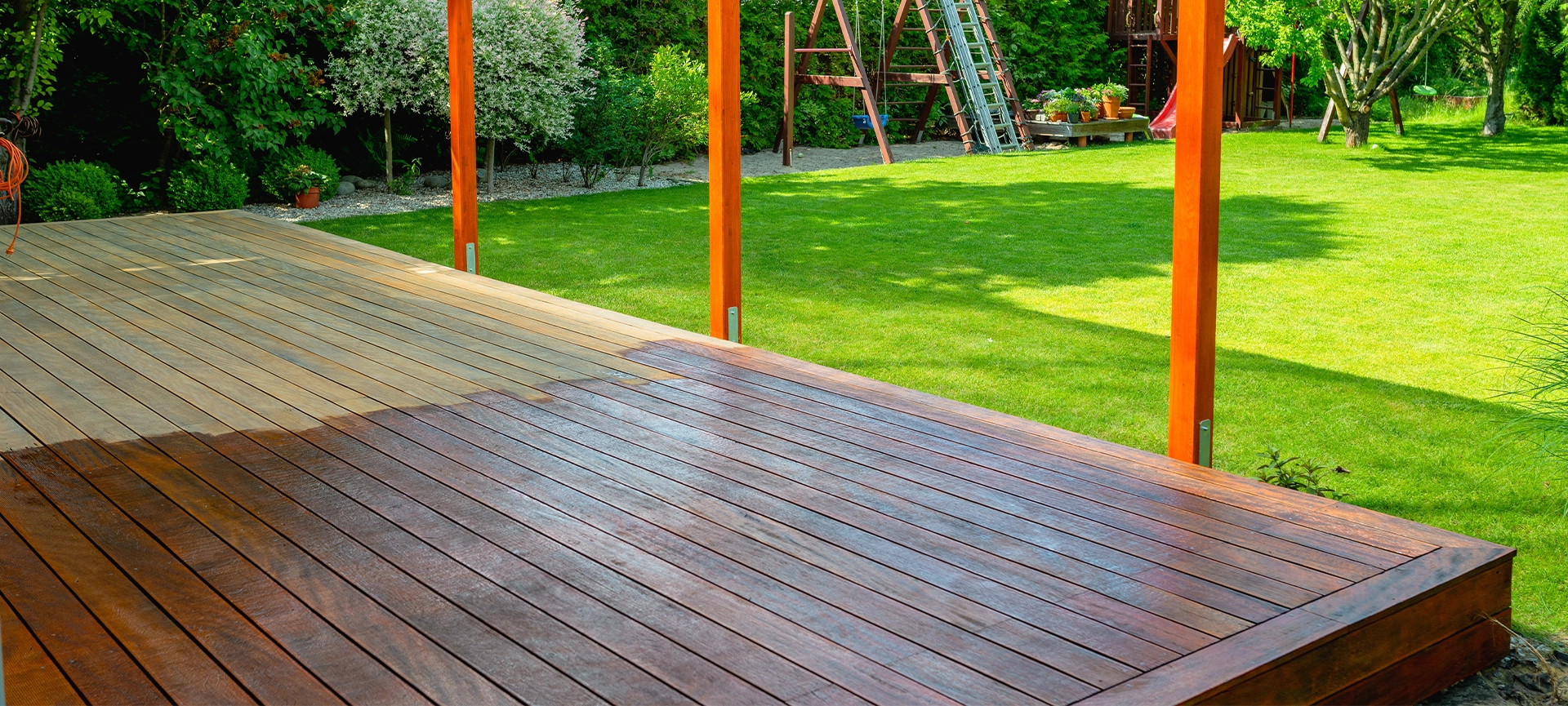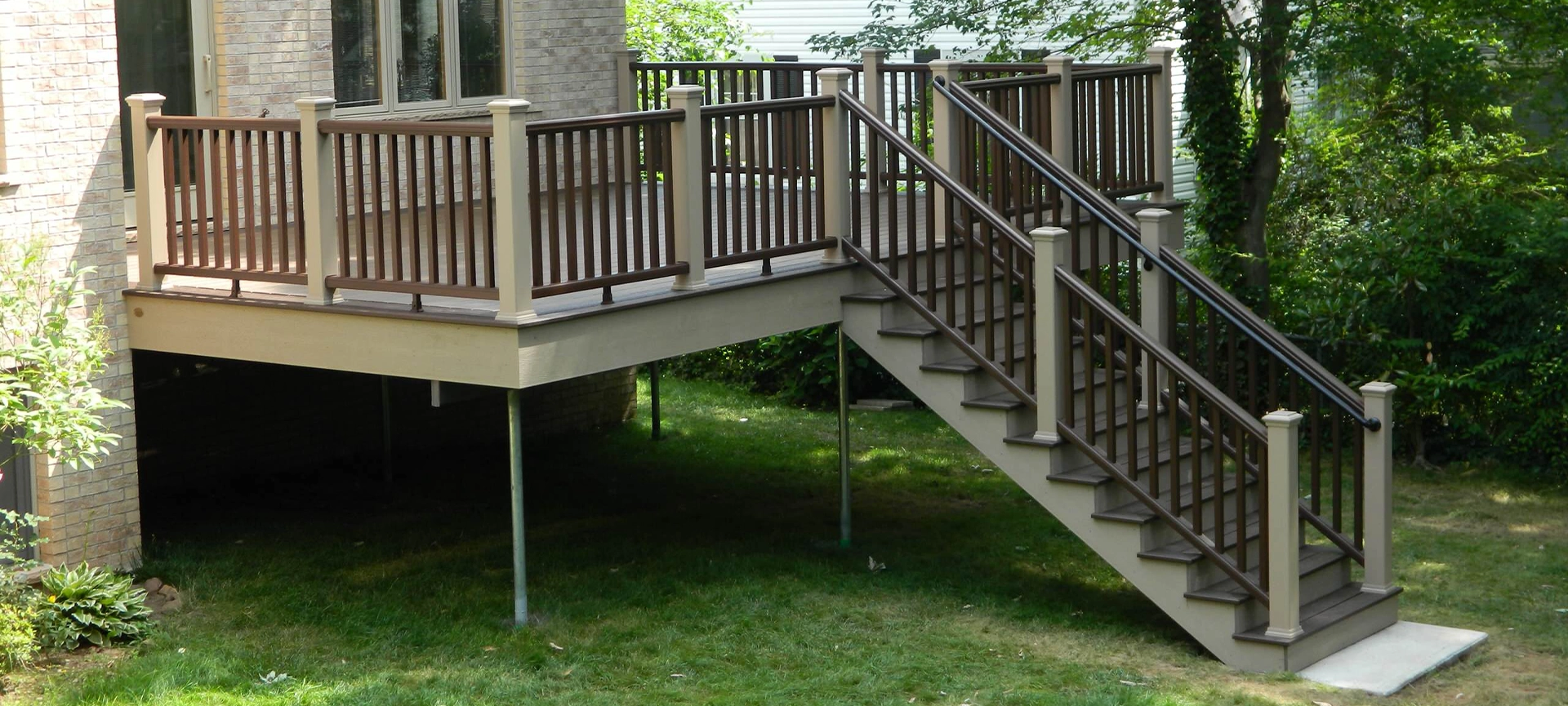
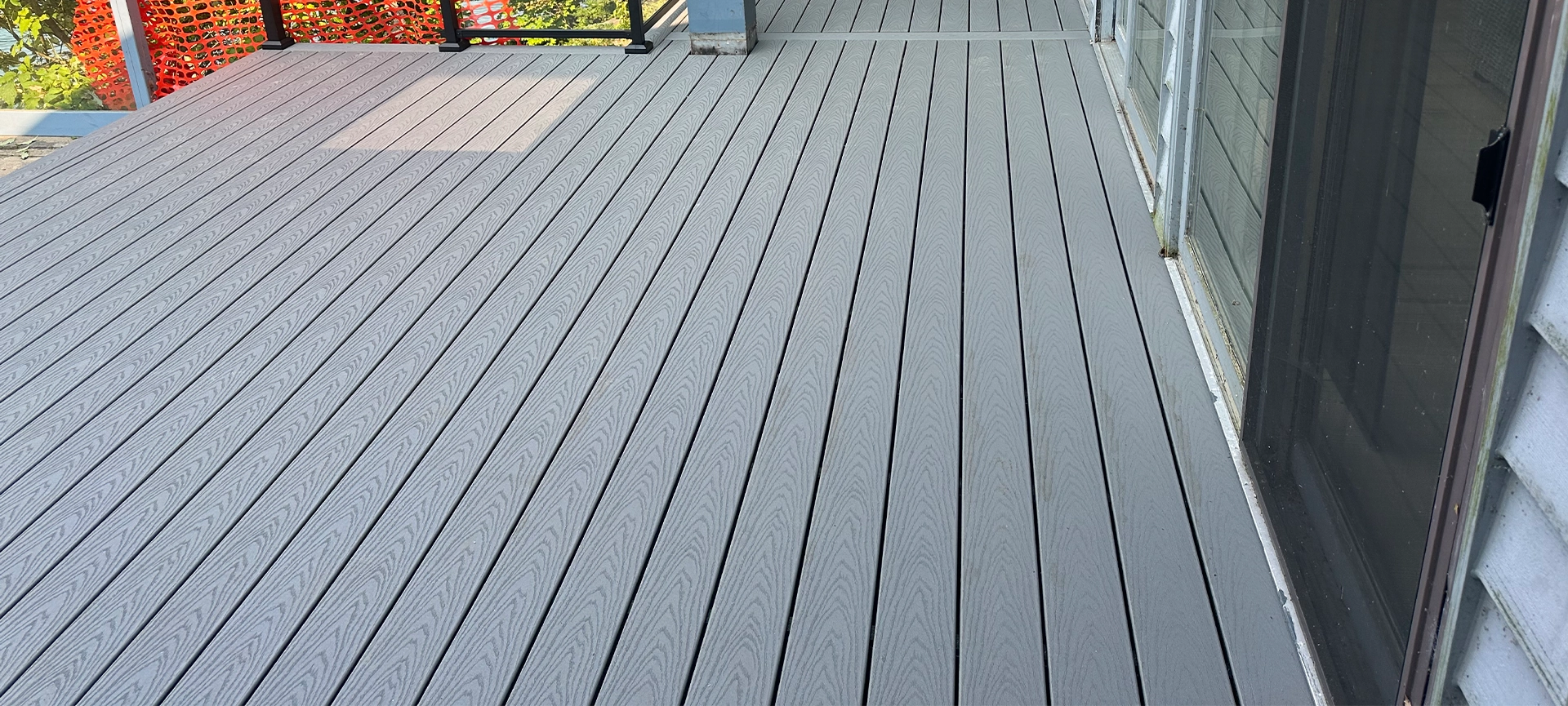

In recent years, low-maintenance decking materials have become increasingly popular as homeowners seek durable, attractive outdoor spaces without the hassle of constant upkeep. Among these decking materials, composite decking and PVC decking have emerged as the two most common alternatives to traditional wood decking. At Green Side Up Contracting, proud TrexPro Platinum Installers and TimberTech Pro Contractors, we have extensive experience with both composite and PVC decking. Based on real-world performance, aesthetics, safety, and long-term value, we recommend composite decking as the preferred choice for most residential projects.
Understanding the Difference: Composite vs. PVC Decking
Composite decking is an engineered wood-plastic blend made by combining wood fibres with recycled plastic polymers. This blend offers the authentic wood look and feel while enhancing durability and resistance to moisture, rot, and insect damage. The wood pulp content allows composite decking to mimic real wood grain and colour variation.
PVC decking materials, in contrast, are made entirely from synthetic polyvinyl chloride plastic. This 100% plastic construction makes PVC decking highly resistant to moisture, mould, and mildew, and it does not absorb moisture or rot. While PVC decking is lighter weight and easier to maintain, it often has a more uniform appearance compared to composite boards.
Both materials appeal to homeowners seeking low-maintenance options, but their differing manufacturing process affects how they perform outdoors. Material composition matters because it influences durability, appearance, and how the decking reacts to environmental conditions like temperature and moisture.
Related Article: PVC vs. Composite Decking: What’s the Difference?
Natural Appearance Matters More Than You Think
Composite decking options stand out for their realistic wood grain texture and subtle colour variations, which closely resemble natural wood. This natural look complements both modern and traditional home styles, enhancing curb appeal and increasing resale value. At Green Side Up, we prioritize aesthetics that blend seamlessly with your home’s architecture.
PVC decking, while durable, often looks uniform and synthetic due to its plastic makeup. Although some high-end PVC decking products and collections have improved in appearance, they still fall short of the depth and variation of composite decking, which can make them feel less natural in outdoor spaces.
Weathering, Fading, and Long-Term Appearance
Composite decking experiences an initial weathering phase where colours may soften or mellow slightly. This phase is intentional and designed to give the decking a natural, aged look that many homeowners find appealing. Over time, composite decking maintains its appearance well, resisting significant fading thanks to advanced protective coatings and stain warranties.
PVC decking generally maintains its original colour longer without fading, but this can sometimes result in an artificial or plastic-like look. Because PVC decking does not change much over time, it may lack the authentic character that natural aging imparts to composite decking.
Many homeowners prefer the “natural aging” of composite decking, which adds character and charm to their outdoor living space.
Performance in Canadian Climate Conditions
Ontario and the Greater Toronto Area experience significant temperature swings, from freezing winters to hot summers with direct sunlight. These fluctuations cause decking materials to expand and contract, which can lead to warping, cracking, or loosening over time.
Composite decking offers greater dimensional stability than PVC decking. Its wood-plastic blend minimizes expansion and contraction, resulting in fewer long-term issues like gaps or structural instability.
PVC decking, being fully synthetic, tends to expand and contract more noticeably, which can affect the deck’s integrity.
For Canadian climates, composite decking provides a more reliable and long-lasting solution that stands up better to temperature extremes.
Slip Resistance and Family Safety
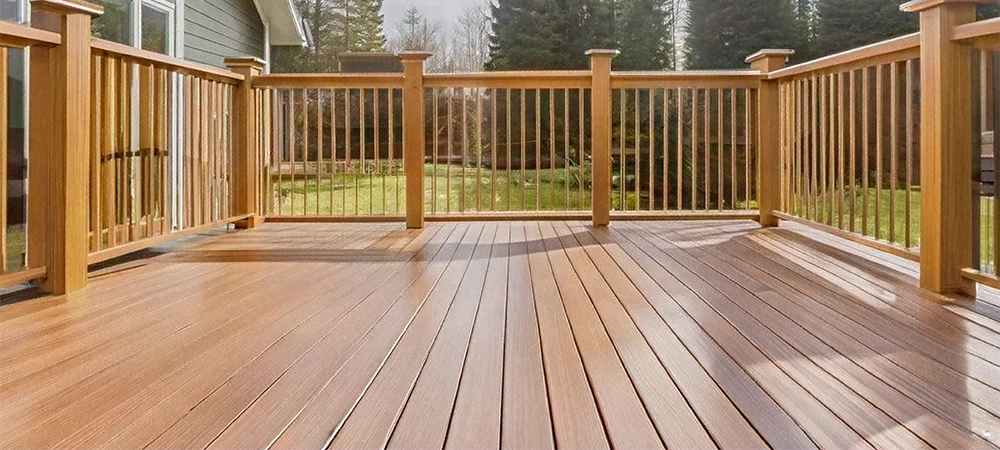
Composite decking features a wood-embossed texture that makes it slip-resistant, making it safer for families, pets, and guests. This textured surface helps prevent slips and falls even when wet.
PVC decking usually has a smoother surface that can become slippery when wet. While some manufacturers offer textured PVC decking options, they generally do not match the slip resistance of composite decking.
Green Side Up recommends composite decking for homes with children, pets, or frequent entertaining to ensure a safer outdoor environment.
Moisture Resistance and Structural Reliability
Both composite and PVC decking resist rot, mould, mildew growth, and splintering, making them suitable for high-moisture environments like pool decks or waterfront properties.
Composite decking balances moisture resistance with a solid, natural feel underfoot, providing homeowners with confidence in the deck’s structural reliability. The wood fibres give composite decking a sturdier, more substantial feel compared to the lighter-weight feel of PVC deck boards.
PVC decking has 100% synthetic makeup that makes it impervious to water absorption, but it can lack the natural tactile experience some homeowners desire.
Installation Experience and Long-Term Performance
Composite decking boards are consistent in size and quality, which simplifies installation. Experienced builders at Green Side Up appreciate how composite decking works well with proven fastening systems, including hidden fasteners and screws, ensuring a secure, long-lasting deck.
PVC decking is lighter and easier to handle but requires more precise spacing and fastening to accommodate expansion and contraction. This can complicate installation and lead to more callbacks or adjustments over time.
Green Side Up’s installers prefer composite decking for its smoother installation process and proven long-term performance.
Environmental Impact and Sustainability
Composite decking often contains recycled materials, reducing environmental impact by reducing waste and giving new life to old materials. Its long lifespan and reduced need for chemical treatments make it an environmentally friendly option.
PVC decking is made from 100% synthetic materials, some manufactured with recycled content. While durable and low maintenance, PVC boards are less biodegradable but can be recycled at the end of their life, supporting sustainability efforts.
Choosing either material supports reduced deforestation compared to traditional pressure-treated wood, but composite decking’s use of recycled wood fibres offers an added sustainable choice.
Installation Tips for Best Results
- Use appropriate fasteners and clips designed for your decking material.
- Allow for expansion and contraction, especially with PVC decking.
- Follow manufacturer spacing guidelines to prevent warping or buckling.
- Consider hidden fastening systems for a cleaner, safer surface.
- Plan for waste and cutting allowances to ensure enough materials.
Proper installation reduces maintenance and enhances durability and long-term satisfaction with your deck. Green Side Up offers professional deck building services in the Greater Toronto Area.
Related Articles: Benefits of Trex Composite Decking
Why Green Side Up Recommends Composite for Most Homeowners
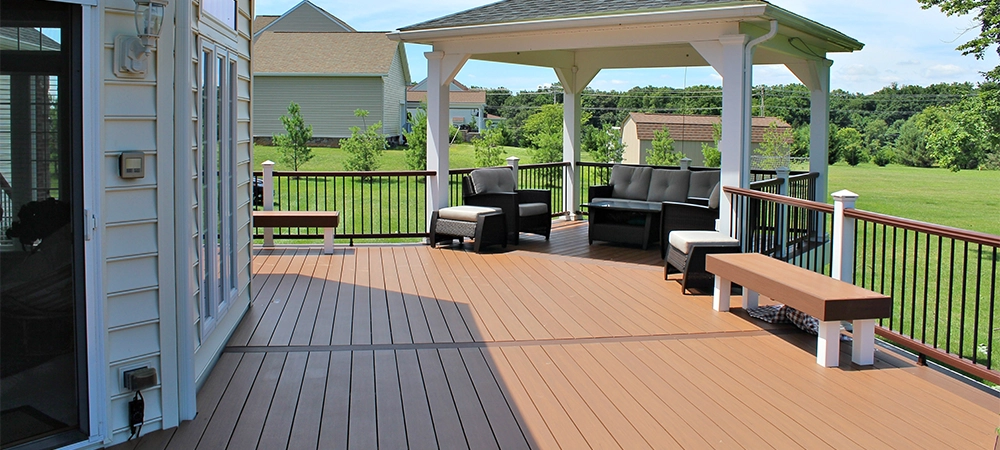
Composite decking offers an ideal balance of authentic aesthetics, safety, durability, and superior performance. Our experience with top-tier brands like Trex and TimberTech Advanced PVC decking has demonstrated that composite decking consistently delivers high-quality results across hundreds of residential projects.
While PVC decking has its advantages, composite decking’s superior natural look, dimensional stability, slip resistance, and ease of installation overall make it the clear winner for most homeowners seeking a beautiful, long-lasting outdoor space.
Final Thoughts
Both composite and PVC decking provide excellent low-maintenance alternatives to traditional wood decking. However, composite decking stands out as the superior option for those who value natural beauty, safety, and reliability over the long term. When choosing decking material, consider your local climate, safety needs, and design preferences. For expert advice tailored to your project, consult with Green Side Up Contracting — your trusted TrexPro Platinum Installer and TimberTech Pro Contractor — to help you build the dream deck you deserve.
Frequently Asked Questions
Is composite decking better than PVC for Canadian weather?
PVC decking and high-performance composite deck boards have exceptional moisture resistance. They can be installed in applications with direct water contact, like docks and pool surrounds, and in regions with heavy rain and humidity without rotting, splitting, or warping. Composite decking has an advantage, though, because it expands and contracts less than PVC as the temperature changes. This helps ensure a stable, long-lasting deck, especially in areas of Canada with extreme weather.
Does composite decking require more maintenance than PVC?
Both materials are low maintenance, but composite decking’s natural weathering process often reduces the need for upkeep over time.
Why does composite decking change colour in the first few months?
Composite decking undergoes an intentional weathering phase that softens its appearance to mimic natural aging within the first six months. This weathering process helps the decking achieve its beautiful, wood-like appearance.
Is composite decking safer than PVC around pools?
Yes. The wood-embossed texture of composite decking provides superior slip resistance compared to the smoother surface of PVC. It is an ideal choice if your deck surrounds a pool or hot tub, or is in a rainy region, where its surface might be frequently wet and a potential hazard for kids and guests.
Which decking more closely resembles wood?
Although manufacturers have made significant strides in developing PVC decking that looks more like wood and less like plastic, the predominantly virgin plastic PVC deck boards can’t compete with the aesthetics of quality wood-plastic composite decking blends. PVC decking tends to have a uniform, synthetic appearance, with regularly repeating grain patterns and colour streaking. Composite decking brands better capture the true beauty of wood with realistic wood-grain embossing and authentic, natural colours.