
A vinyl pool can last for years, but it will not stay in good condition without updates. Liners fade, seams weaken, steps shift, coping loosens, and the surrounding deck can start to look worn long before the pool structure itself needs replacement.
Instead of removing the whole pool, restoration focuses on repairing, refreshing, and upgrading the parts that affect appearance, comfort, safety, and water performance.
For many homeowners, this is the practical middle ground between small repairs and a full pool rebuild.
Related Article: Vinyl vs. Fibreglass Pools: A Full Comparison
Signs Your Vinyl Pool Needs Restoration
A faded liner is common, especially after years of sun, chlorine, and seasonal use. Fading alone may not mean the pool is failing, but it can make the whole backyard look older than it is.
Other signs need faster attention:
- Wrinkles that keep getting worse
- Tears, cracks, or brittle vinyl
- Water loss that is more than normal evaporation
- Staining that does not respond to cleaning
- Soft spots under the liner
- Rust marks near pool walls or fittings
- Loose coping around the edge
- Cracked concrete near the pool
- Uneven pavers or sinking deck areas
- Steps that feel weak or shifted
Related Article: Step-by-Step Pool Restoration Process
Benefits of Restoring a Vinyl Pool
Vinyl pool restoration can make a backyard feel new again, but the benefits go beyond appearance. A well-planned restoration can improve how the pool performs and how easy it is to maintain.
Better Appearance
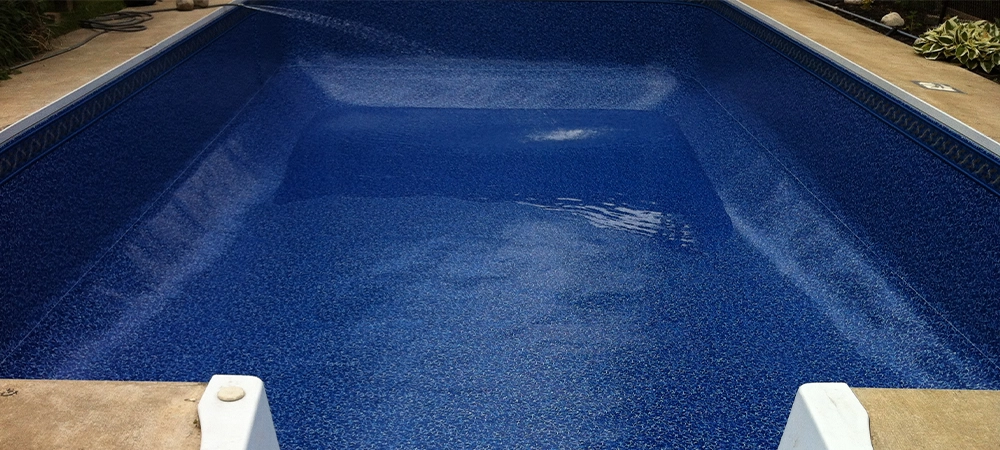
A new liner can change the entire look of the pool. Modern vinyl liners come in a wide range of colours, tile patterns, and floor designs. Some create a deep blue resort-style finish, while others offer a softer, natural look.
Improved Comfort and Safety
Older liners can become slippery, rough, wrinkled, or loose. These issues may seem minor at first, but they can affect footing and comfort.
Restoration can also address sharp coping edges, cracked deck areas, unstable steps, and uneven surfaces around the pool. These upgrades matter for families, guests, and anyone using the pool regularly.
Better Water Retention
A damaged liner can lead to leaks, higher water bills, and more chemical imbalance. When water levels drop, pumps may also work harder than they should.
Replacing the liner and repairing fittings can help the pool hold water properly again. This can reduce wasted water and make maintenance more predictable.
Stronger Backyard Value
A worn pool can make a backyard feel like a future expense. A restored pool can do the opposite. It shows that the outdoor space is cared for, functional, and ready to use.
For homeowners planning to stay, this adds everyday value. For homeowners preparing to sell, a clean and updated pool area can help reduce buyer hesitation.
Related Article: Backyard Prep for Pool Installation
Vinyl Pool Restoration Options
Every pool does not need the same level of work. The right option depends on the age of the pool, the condition of the liner, the surrounding hardscape, and the homeowner’s goals.
Vinyl Liner Replacement
Liner replacement is the most common vinyl pool restoration option. The old liner is removed, the pool is measured, repairs are made as needed, and a new custom liner is installed.
Before the new liner goes in, the contractor should inspect the pool floor, walls, seams, steps, skimmer, returns, and lights.
Pool Floor and Wall Repairs
Once the liner is removed, hidden issues may become visible. These can include rusting steel panels, cracks, uneven vermiculite, floor washouts, or settled areas.
Minor repairs may be handled before the liner installation. Larger problems may require more preparation before the pool can be safely relined.
Step and Stair Updates
Vinyl pools may have built-in steps, steel steps, plastic steps, or covered stair sections. Over time, these areas can stain, crack, shift, or feel weak.
Restoration may include cleaning, resurfacing, replacing fittings, or improving the liner fit around the stairs. In some cases, homeowners choose to upgrade the step style for easier entry and a cleaner pool design.
Coping Replacement
Damaged coping can make the pool look dated, but it can also affect safety. Loose, cracked, or uneven coping should be addressed before it gets worse.
Replacement options may include concrete coping, stone coping, aluminum coping, or other pool-safe materials. The best choice depends on the pool structure, deck style, budget, and desired finish.
Related Article: Do Pool Copings Crack in Cold Weather?
Pool Deck Repair or Replacement
The area around the pool affects both function and appearance. Cracked concrete, uneven pavers, poor drainage, or worn surfaces can make the pool area less inviting and less safe.
Pool deck work may include:
- Repairing cracks
- Re-levelling settled areas
- Replacing damaged pavers
- Installing new patio stone
- Improving drainage
- Expanding seating areas
- Updating walkways around the pool
This is where pool restoration often connects with broader backyard design. If the pool is being refreshed, it makes sense to look at how people move, sit, and gather around it.
Landscaping Around the Pool
Planting beds, privacy features, lighting, retaining elements, and pathways are landscaping jobs that can all improve the space around the pool. The key is choosing materials and plants that handle poolside conditions, including sun, splash, foot traffic, and seasonal maintenance.
How Much Does Vinyl Pool Restoration Cost?
Many vinyl liner replacement projects fall into the low-to-mid thousands, while larger inground pool restoration projects can cost more when structural repairs, custom liner details, or surrounding hardscape work are included.
Several factors affect the final price:
- Pool size and shape
- Liner thickness and pattern
- Condition of the pool floor and walls
- Step, bench, or deep-end complexity
- Leak repairs
- Coping condition
- Deck repair or replacement needs
- Site access
- Water removal and refill requirements
- Labour, disposal, and seasonal timing
A rectangular pool with standard depth and good access is usually more straightforward. A custom-shaped pool with stairs, benches, wall repairs, and damaged coping will take more labour and planning.
The best way to price vinyl pool restoration is through an on-site assessment. Photos can help start the discussion, but a contractor needs to inspect the liner, fittings, edge details, deck condition, drainage, and access before giving a clear estimate.
What Affects the Cost Most?
The liner itself is only one part of the budget. In many restoration projects, the biggest cost changes come from the work discovered once the old liner is removed.
For example, if the pool floor has shifted or washed out, repairs are needed before the new liner goes in. If the coping is loose, the edge may need attention before the pool can be finished properly. If water has been moving toward the pool deck, drainage may need correction to prevent future damage.
Access can also affect pricing. A backyard with tight side-yard access may require more manual labour. Properties with limited space for equipment, material staging, or disposal may need extra planning.
Material choices also matter. A premium liner pattern, thicker liner, upgraded coping, or new surrounding patio area will increase the cost, but these choices may also improve the finished result and reduce future work.
The Best Time to Restore a Vinyl Pool
Spring and early summer are popular times for pool restoration, but booking earlier can help avoid seasonal delays.
Contractors often become busier as the weather improves and homeowners start preparing their backyards for summer.
Fall can also be a good time for restoration planning. The pool may be used less, and the project can prepare the backyard for the next season.
Weather matters during pool work. Rain, cold temperatures, and ground conditions can affect timing. This is especially true if the project includes deck repair, drainage work, or landscaping around the pool.
Ready to Bring Your Pool Area Back to Life?
If your vinyl pool is faded, leaking, uneven, or no longer fits the way you use your backyard, Green Side Up Contracting can help you plan the next step.
Book a consultation to review your outdoor space and explore the best restoration options for your property.
Frequently Asked Questions
How long does a vinyl pool liner last?
A vinyl pool liner often lasts 7 to 12 years, depending on water chemistry, sun exposure, maintenance, liner quality, and installation. Some liners last longer, but fading, brittleness, wrinkles, leaks, or frequent patching are signs that replacement may be needed.
Can you restore a vinyl pool without replacing the liner?
Yes, minor restoration may be possible without replacing the liner if the liner is still flexible, watertight, and properly fitted. Repairs may include patching, cleaning, coping work, deck repairs, or landscaping updates around the pool area.
What is the highest hidden cost in vinyl pool restoration?
The highest hidden cost is often repair work under or around the liner. Once the old liner is removed, the contractor may find floor washouts, wall corrosion, rough surfaces, damaged fittings, or drainage issues that must be fixed before installation.
Can pool deck work be done during vinyl pool restoration?
Yes, pool deck work can often be planned with vinyl pool restoration. This may include crack repair, paver replacement, drainage improvement, new coping, or patio updates. Coordinating the work can create a cleaner finish and reduce repeated disruption.
Is vinyl pool restoration worth it?
Vinyl pool restoration is worth it when the pool structure is still sound, and the main issues can be repaired properly. It can improve appearance, comfort, water retention, safety, and backyard usability without the cost of a complete pool replacement.