
An outdoor kitchen can turn a backyard into the place where summer happens. It gives you a proper cooking area, a cleaner entertaining setup, and a better reason to use the space. The best place to start is not with appliances. It is how you want the space to work. Before choosing a grill, countertop, or cabinet finish, build the plan around daily use first.
Start With How You Will Use the Space
Every strong outdoor kitchen starts with a simple question: what do you want to do outside? Some want a casual barbecue station for family dinners. Others want a full entertaining zone with prep space, seating, lighting, storage, and a nearby dining area.
Think about your usual summer habits first. Do you host large gatherings, or do you prefer quiet dinners outside? Do you cook from scratch, or do you mostly grill and serve? Do you need a sink, fridge, and storage, or would a built-in grill with counter space be enough?
Related Article: Backyard Landscape Ideas to Elevate Your Outdoor Space
Choose the Right Outdoor Kitchen Location
A kitchen placed too far from the house can feel inconvenient, especially when carrying food, dishes, and drinks. A kitchen placed too close to doors, windows, or seating may create smoke, heat, or crowding.
A good location should consider:
- Access to the indoor kitchen
- Wind direction and smoke movement
- Sun exposure during cooking hours
- Existing deck, patio, or walkway layout
- Space for guests to move safely
- Access to gas, plumbing, and electrical lines
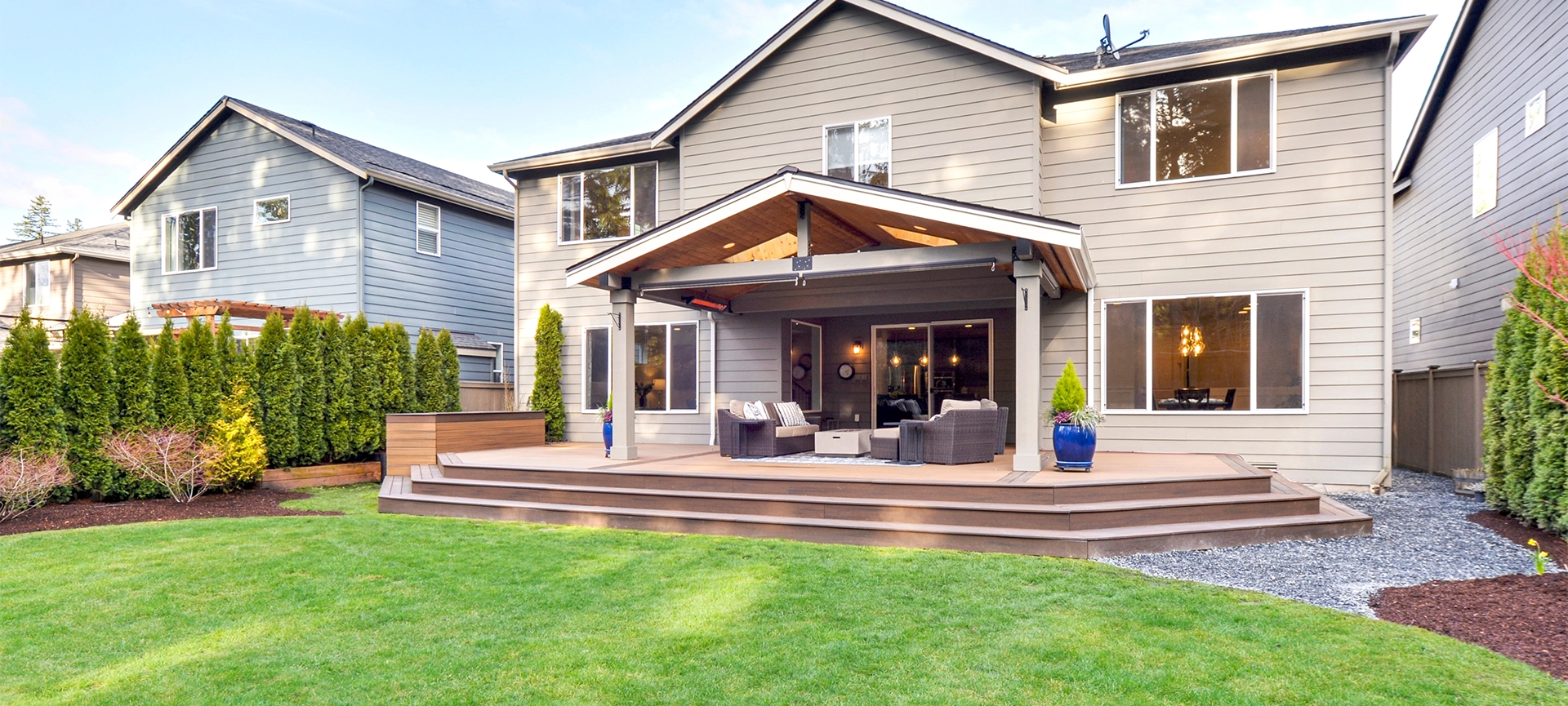
In many backyards, the best location is connected to an existing patio or deck. This creates a natural flow between cooking, dining, and relaxing.
Build Around a Practical Layout
Outdoor kitchen layouts do not need to be complicated. The goal is to create a smooth path between cooking, prep, serving, and seating.
The most common layouts include:
- Straight run: Best for smaller yards, narrow patios, and simple grill stations.
- L-shape: Good for separating cooking and prep while keeping everything within reach.
- U-shape: Better for larger spaces with more storage and counter area.
- Island layout: Ideal when the kitchen also serves as a gathering spot.
Leave enough room behind and around the cooking area so people can pass without getting too close to heat. Counter space matters too. A beautiful grill becomes frustrating if there is nowhere to place platters, tools, sauces, or prepared food.
Related Article: What Adds the Most Value to a Backyard?
Pick Materials That Can Handle Canadian Weather
Outdoor kitchens in the Greater Toronto Area need materials that can handle heat, rain, snow, freeze-thaw cycles, and regular cleaning.
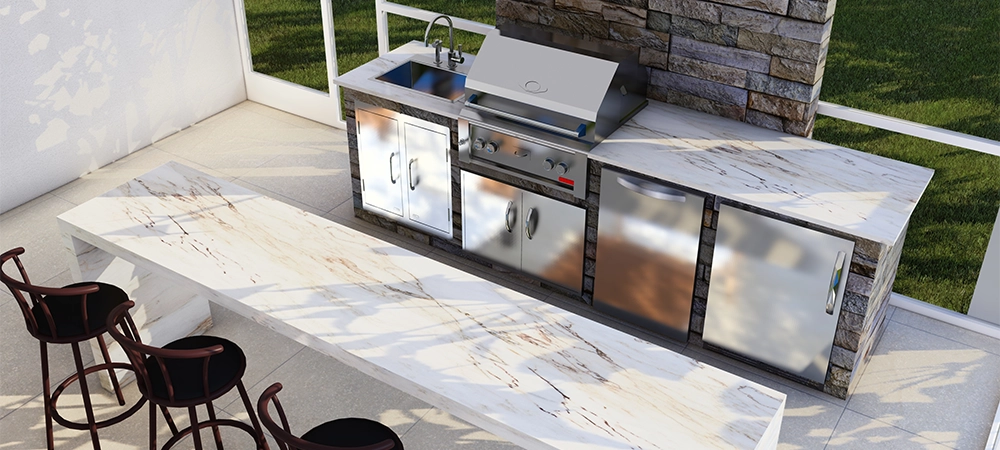
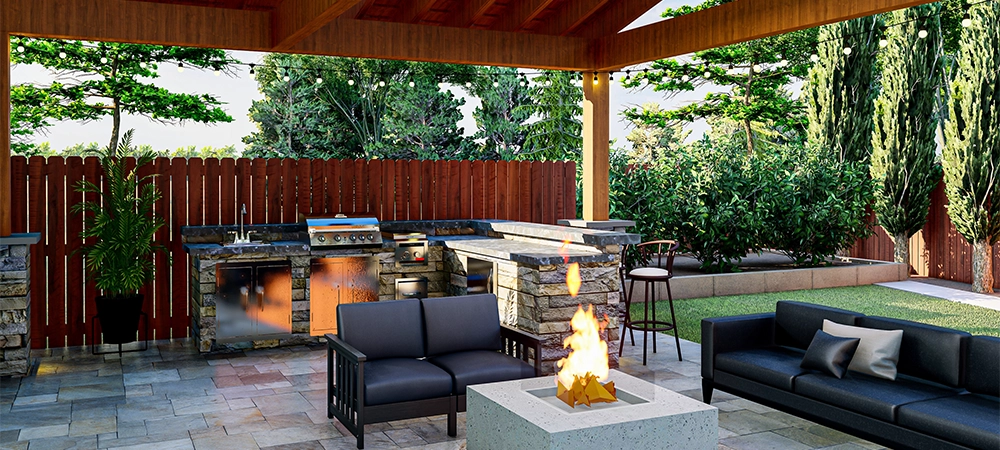
- For countertops, choose materials that resist moisture, stains, and temperature changes. Natural stone, concrete, porcelain, and outdoor-rated surfaces are common options, but each has different maintenance needs.
- For cabinets, look for weather-resistant materials such as stainless steel, masonry, or outdoor-rated systems.
- The base structure is just as important as the surface finish. A kitchen built on an uneven or poorly drained area can shift, crack, or hold water.
- Before choosing finishes, make sure the patio, deck, or foundation beneath the kitchen can support the design.
Plan Utilities Early
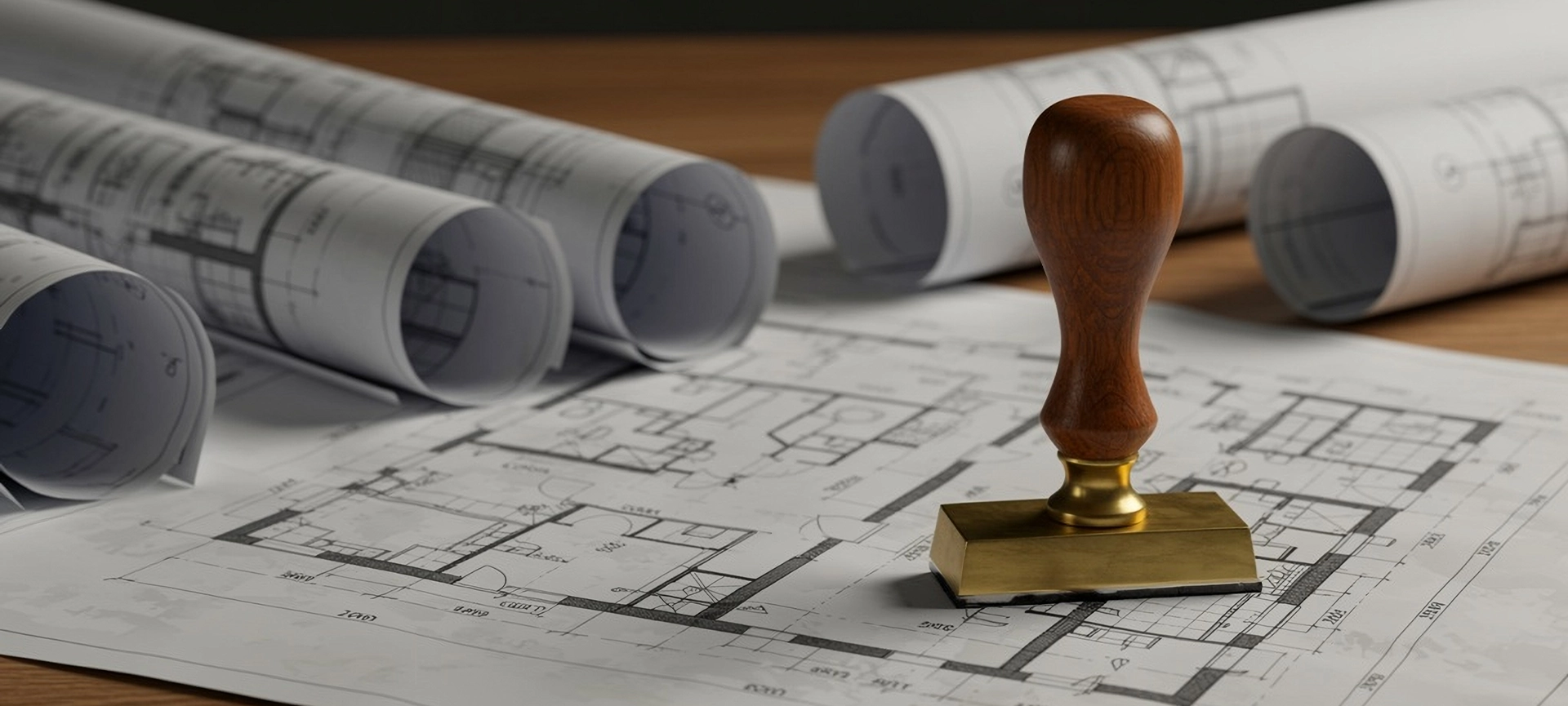
Gas, water, drainage, and electrical work should never be afterthoughts. These details affect layout, budget, permits, safety, and long-term function.
A built-in grill may require a gas line. A sink needs a water supply and drainage. A fridge, lighting, outlets, and appliances need proper electrical planning. Even if you start with a simpler kitchen, it is worth thinking about future upgrades before the hardscape is finished.
Planning utilities early helps avoid tearing up new patio stones, deck boards, or landscaping later.
Add Storage Without Overbuilding
Outdoor storage can make the kitchen easier to use, but it should be planned with care. You may need room for grilling tools, serving trays, dishes, cleaning supplies, cushions, or seasonal accessories. Too many cabinets can increase cost and reduce usable patio space.
Focus on what you actually want to keep outside. Items that attract pests, absorb moisture, or need climate control should stay indoors. Outdoor storage should be easy to clean, weather-resistant, and close to where you use those items.
Think About Shade, Shelter, and Lighting
A cooking station in full afternoon sun may look good in spring but feel uncomfortable during July and August. Shade, shelter, and lighting can extend how often you use the space.
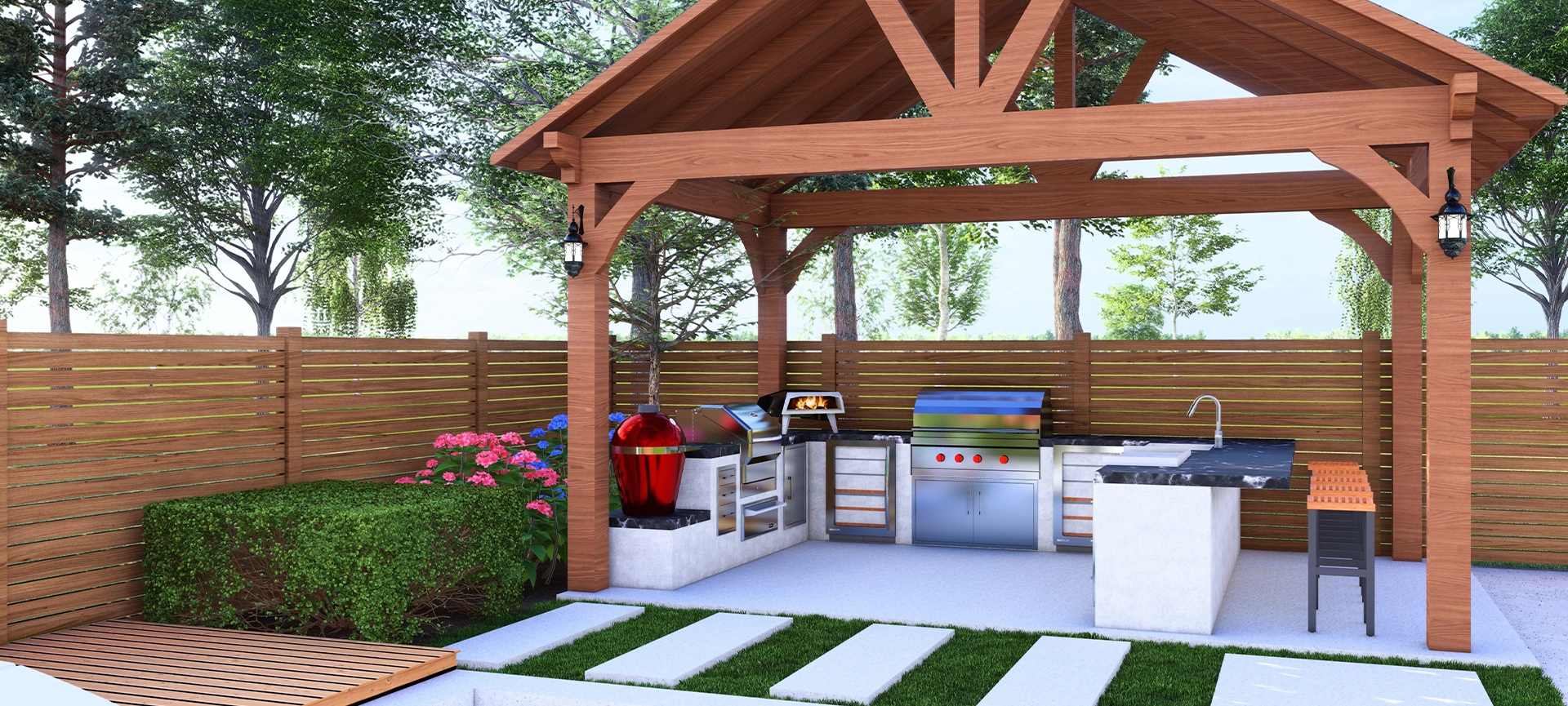
Consider a pergola, privacy screen, covered section, umbrella, or nearby planting to soften sun and wind.
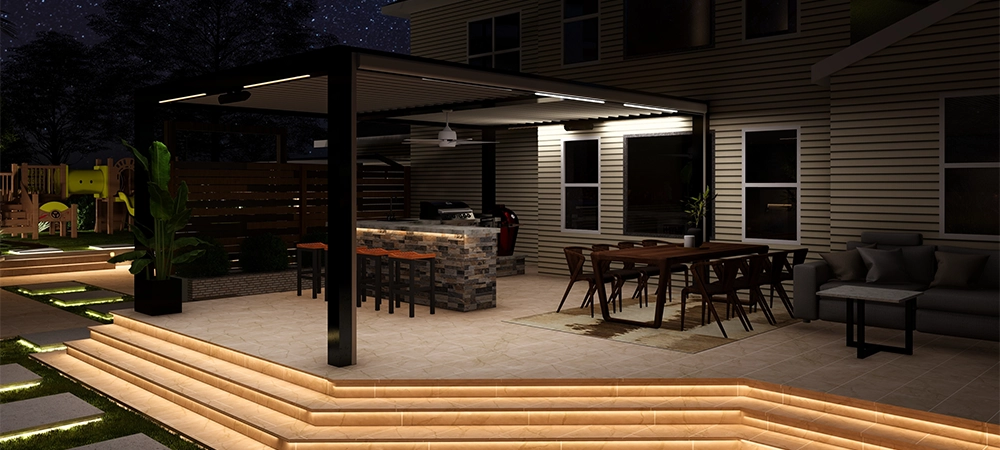
Lighting should include task lighting for cooking and softer ambient lighting for dining. Path lights can also improve safety between the kitchen, house, and seating areas.
Connect the Kitchen to the Rest of the Yard
An outdoor kitchen works best when it feels connected to the full backyard design. It should not look like a separate block placed at random. Decking, fencing, planting, patios, lighting, and walkways all affect how the kitchen feels.
Privacy is also important. If your cooking or dining area faces a neighbour’s window, a fence, screen, or planting plan can make the space more comfortable. If the yard slopes or drains poorly, grading and hardscaping may need to come before the kitchen installation.
A contractor can look at the full yard and help you plan a space that feels complete.
Set a Realistic Budget for Summer 2026
Outdoor kitchen costs can vary widely because every yard, layout, and feature list is different. A simple built-in grill station costs less than a full kitchen with plumbing, electrical work, stone counters, lighting, seating, and a new patio or deck.
Instead of starting with a random number, divide your budget into core categories:
- Site preparation
- Patio, deck, or base structure
- Grill and appliances
- Countertops and cabinets
- Gas, water, drainage, and electrical work
- Shade, lighting, fencing, and landscaping
This makes it easier to see where your money is going. It also helps you decide what should be built now and what can be added later.
Work With a Contractor Before You Buy Appliances
It can be tempting to buy the grill first, especially when summer sales start. However, appliances should fit the design. Measurements, ventilation, clearances, counter height, fuel type, and service access all matter.
Before buying anything, speak with a contractor who understands decks, patios, fencing, landscaping, and outdoor structures. This helps avoid expensive mismatches, such as a grill that does not fit the cabinet system or a fridge placed too far from power.
Green Side Up can help homeowners plan an outdoor kitchen as part of a complete backyard design, from the deck or patio base to privacy, flow, and finishing details.
Related Article: How to Winterize Your Outdoor Kitchen
Your Summer 2026 Backyard Starts With a Plan
A great outdoor kitchen starts with clear decisions, not the biggest appliance package. Choose the right location, build a practical layout, plan utilities early, use weather-ready materials, and connect the kitchen to the rest of your yard.
If you want your backyard ready for summer 2026, start planning early. Give us a call. Green Side Up can help you design an outdoor kitchen that fits your space, your budget, and the way you want to enjoy your home outside.
Frequently Asked Questions
How early should I start planning an outdoor kitchen for summer 2026?
Start planning in winter or early spring, especially if the project needs a new patio, deck, utilities, or permits. Early planning gives you more design options, better scheduling, and enough time to solve layout or drainage issues before summer arrives.
What is the best location for an outdoor kitchen?
The best location is close enough to the house for easy food access, but far enough from doors, windows, and seating to manage smoke and heat. It should also connect naturally to your patio, deck, dining, and walkway areas outdoors.
Do outdoor kitchens need plumbing and electrical work?
Some outdoor kitchens need plumbing and electrical work, depending on the features you choose. A sink, fridge, outlets, task lighting, and gas appliances require early planning so lines can be installed safely before patios, decks, or landscaping are finished properly.
What materials work best for outdoor kitchens in Canada?
Choose materials rated for outdoor use and Canadian weather, including freeze-thaw cycles, rain, heat, and snow. Common options include stone, concrete, porcelain, stainless steel, masonry, and weather-resistant cabinet systems, depending on your budget, maintenance preferences, and design goals overall too.
Can Green Side Up design the full backyard around the kitchen?
Yes. Green Side Up can help plan the outdoor kitchen with the surrounding deck, patio, fencing, lighting, privacy, planting, and yard layout. This creates a more complete backyard design instead of treating the kitchen as a separate feature alone outside.