
Last Updated: November 24, 2026
Quick Summary
The best backyard fencing materials in 2026 depend on climate durability, privacy, maintenance, and like-for-like cost, so the right pick depends on your yard rather than a trend. Cedar wood lasts 15-25 years with annual staining, while vinyl lasts 20-30 years with occasional washing. Aluminum and composite both last 25-30 years or more.
- Cedar wood lasts 15-25 years and needs annual staining.
- Vinyl lasts 20-30 years and needs only occasional washing.
- Chain link lasts 15-20 years and needs minimal maintenance.
- Aluminum lasts 25-30+ years and suits open views and curb appeal.
- Cedar and vinyl handle cold-climate performance well when posts are set below the frost line.
Table of Contents
- Best Backyard Fencing Materials 2026: A Quick Comparison
- Wood vs. Vinyl Fence: Which Suits Your Backyard?
- Fence Materials for Ontario Winters
- Frequently Asked Questions
Best Backyard Fencing Materials 2026: A Quick Comparison
Choosing among the best backyard fencing materials in 2026 comes down to climate durability, privacy, maintenance, and like-for-like cost. The right pick depends on your yard, not a trend.
| Material | Lifespan | Maintenance | Best For |
|---|---|---|---|
| Cedar wood | 15-25 years | Annual staining | Warm look, privacy |
| Vinyl | 20-30 years | Occasional wash | Low-maintenance yards |
| Chain link | 15-20 years | Minimal | Boundaries, security |
| Aluminum | 25-30+ years | Minimal | Open views, curb appeal |
| Composite | 25-30 years | Occasional wash | Low upkeep, modern style |
For a quick estimate of material quantities, use our instant fence calculator. Ready to build? Explore our full fence installation services.
Lifespan of backyard fencing materials
Wood vs. Vinyl Fence: Which Suits Your Backyard?
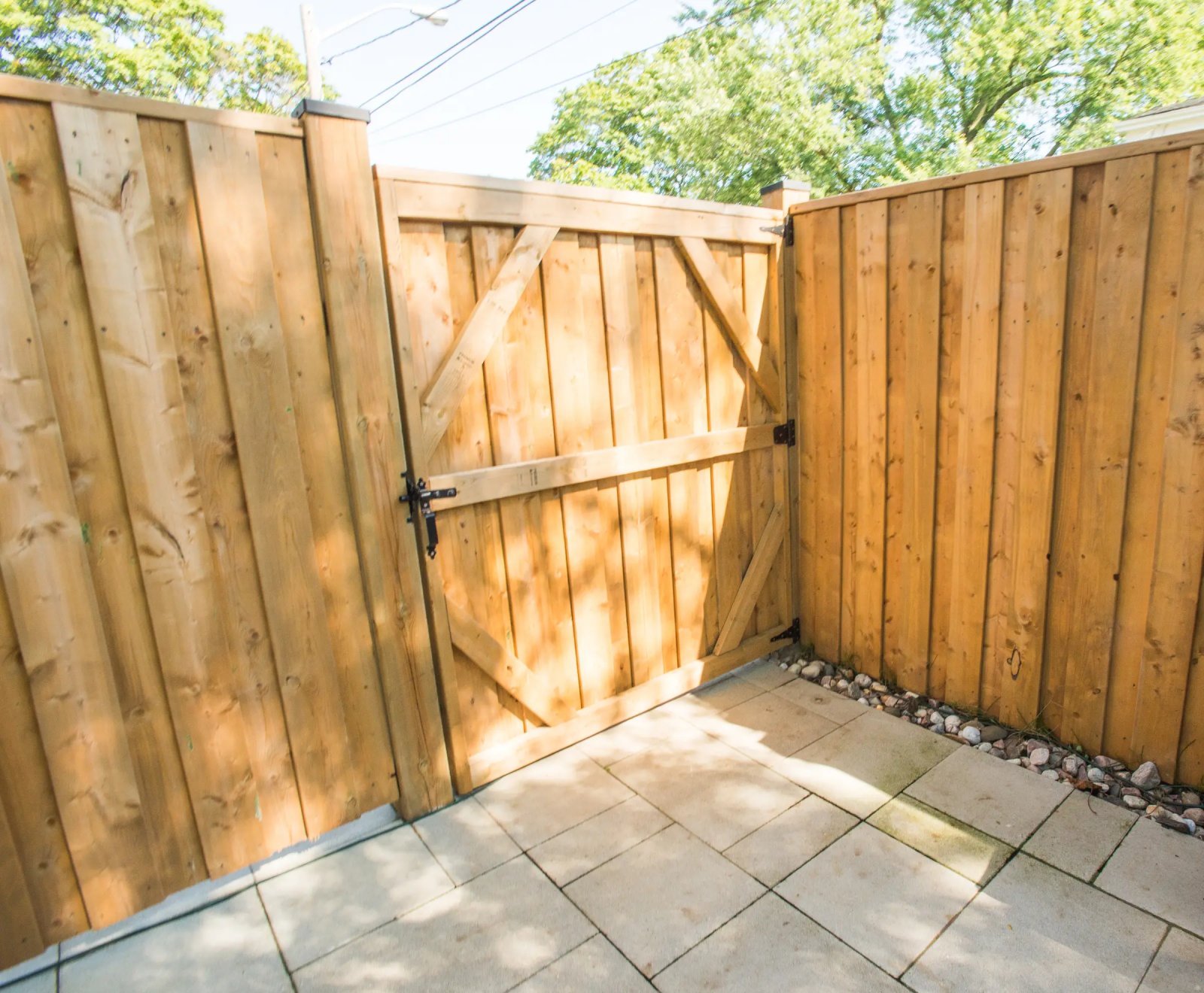
Wood wins on warmth and repairability; vinyl wins on low-maintenance backyard fencing. Cedar and pine cost less upfront but need annual staining; vinyl resists rot and never needs painting, though a cracked panel means replacing a whole section. See our fencing material value comparison for like-for-like pricing.
Fence Materials for Ontario Winters
Cedar and vinyl handle cold-climate performance well when posts are set below the frost line. Read our guide to durable fencing for harsh winters, or see why homeowners trust our team to build it right.
Still weighing wood against vinyl? Green Side Up Contracting Inc brings 26 years of experience, Landscape Ontario membership, and 11 HomeStars awards to every fence, deck, and hardscape project. We build custom fences designed for extreme weather, improved drainage, and lasting curb appeal. Get started with Green Side Up Contracting Inc and fence your backyard with materials built for our climate.
Frequently Asked Questions
What is the best material for a backyard fence?
There is no single best material, only the best fit for your yard. Cedar and other wood fencing offer warmth and repairability, vinyl and composite fencing cut maintenance, and aluminum or chain-link fencing handle budget and security needs. Weigh privacy, climate exposure, and how much upkeep you will tolerate before deciding. A contractor can match the material to your soil, wind exposure, and property boundary.
Is wood or vinyl fencing better for a backyard?
Wood vs. vinyl fence comes down to upkeep versus upfront cost. Wood, especially cedar, is repairable board by board and suits cold-climate yards when sealed properly, but it needs periodic staining. Vinyl fencing resists rot and needs little more than a wash, yet panels can crack in extreme cold and repairs are less flexible. In freeze-thaw cycles, both work when posts are set below the frost line.
How much does a backyard fence cost per foot in CAD?
Fence material cost per foot in CAD varies widely by material, height, and site conditions, so no single figure fits every yard. Wood, vinyl, composite, aluminum, and chain-link each carry different material and installation costs, and gates, removal of an old fence, and grading add to the total. Request a written quote based on your property line length and terrain for accurate pricing.