
Last Updated: November 15, 2026
Quick Summary
Small backyards feel bigger when layout does the work: measure and sketch the footprint, divide the space into distinct zones, size the patio to real furniture, layer privacy, and choose compact, low-maintenance plants. Each step leaves the yard looking open, not crowded.
- Sketch your yard to scale on graph paper, using one square per foot.
- Add at least 3 feet of clearance around patio furniture for comfortable use.
- Layer privacy with a fence, climbing vines and shrubs stepping down toward the patio.
- Choose plants by light, hardiness, mature size and maintenance needs.
- Set aside roughly 10 to 15 percent of the budget for drainage or grading surprises.
Table of Contents
- Measure Your Footprint and Sketch a Layout Plan
- Divide the Yard Into Zones That Work Together
- Plan a Patio Sized for the Space You Actually Have
- Build Privacy With Layered Fencing, Vines, and Shrubs
- Choose Low-Maintenance Plants That Suit Your Climate and Sun
- Budget the Project and Book Your Residential Quote
- Frequently Asked Questions
Small backyards get written off too quickly. A yard of 300 square feet or less rarely feels like a place to host friends, grow vegetables and sit outside after dinner, yet with careful planning even a small backyard can do all three. The difference usually comes down to layout: where the eye lands, how the space is divided, and whether every square foot has a job. The patterns that make a small yard feel larger repeat again and again. This guide walks through the planning sequence we use, from measuring the footprint to choosing plants and setting a budget.
Measure Your Footprint and Sketch a Layout Plan
Every good small-yard design starts on paper. Measure the length and width of the yard, note where the house, fences and existing trees sit, and mark the locations of downspouts, service lines and any utility covers. Then draw it to scale on graph paper, using one square for one foot or 30 centimetres.
Mapping Sun, Shade, and Drainage Before You Design
Before you place a single bed or bench, record how the yard behaves through the day and across the seasons. Walk the space at 9 a.m., noon and 4 p.m. and mark where sun reaches the ground. Note the spots that stay wet after a heavy rain, and look for low corners where water pools near the foundation. These observations help decide where plants will thrive and where a patio will hold up.
Sketching Three Sample Layouts for Different Yard Shapes
Narrow rectangular yards, deep and shallow yards, and irregular wedge-shaped lots each call for a different approach. Sketch at least two options for your shape:
- Narrow yard (under 15 feet wide): Run a single pathway down one side and place planting beds along the other, so the eye travels the full length.
- Deep yard: Divide it into two or three rooms with a change in material or a low hedge, which makes the depth feel intentional rather than endless.
- Irregular or wedge-shaped yard: Anchor a patio on the widest part and let curved beds soften the awkward edges.
Compare the sketches against your sun and drainage notes, then keep the version that fits both.
Divide the Yard Into Zones That Work Together
Once the footprint is mapped, decide what the yard needs to do. Most small yards serve three or four purposes: dining, lounging, planting and storage. Assign each purpose its own zone, then connect them so the space reads as one property rather than a collection of leftovers.
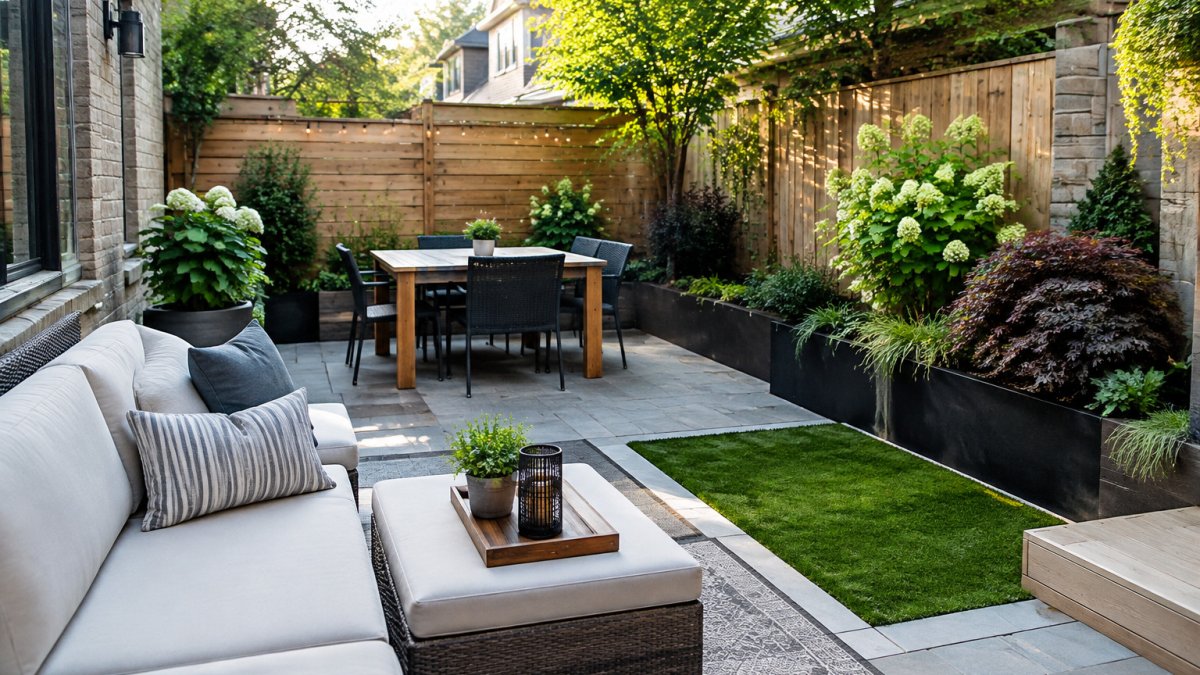
Keep zones distinct with changes in height, material or planting. A raised bed can mark the edge of a dining area. A row of compact shrubs can separate the lounge from the garden. Zones that overlap too much make a small yard feel busy, so resist the urge to squeeze in one more function. A flexible setup, such as a fold-away table or movable planters, lets one area serve two purposes without crowding the plan.
Plan a Patio Sized for the Space You Actually Have
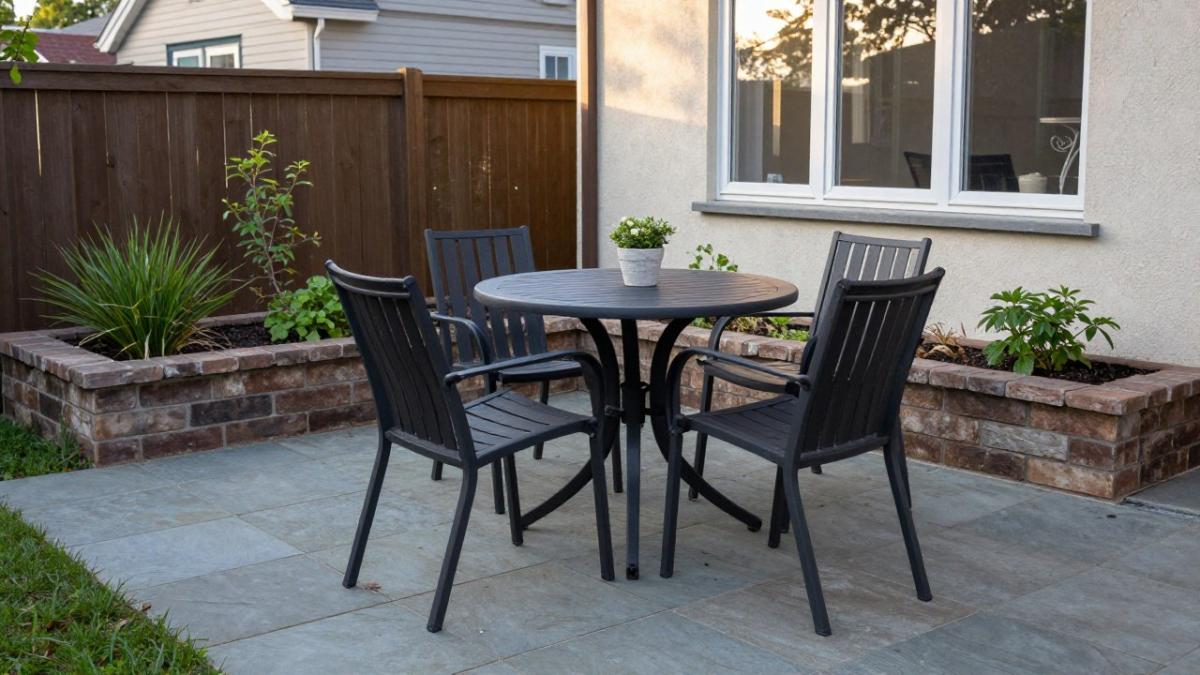
The patio is usually the largest single feature in a small yard, so its size matters more than any other decision. Measure the furniture you plan to use, then add at least 3 feet of clearance around each piece so chairs can be pulled out without bumping into a wall or planter. A two-person bistro set needs roughly 6 by 6 feet. A four-person table with chairs needs closer to 10 by 10 feet.
Deciding between a patio and a deck depends on drainage, budget and how the yard slopes. A ground-level patio is generally simpler and lower-maintenance in a small footprint, while a raised deck may suit a yard that drops away from the house. Set the surface slightly away from the foundation and grade it to shed water, so the patio does not trap runoff against your home.
Hardscape also needs to soften into the planting. Edge the patio with low groundcover or a border of perennials so the hard surface does not read as a slab.
Build Privacy With Layered Fencing, Vines, and Shrubs
Privacy in a small yard works best in layers rather than a single tall wall. A solid fence blocks the view but can make a yard feel boxed in, while layered planting screens sightlines and keeps the space open. Combine three elements:
- A fence or trellis at the boundary for the primary screen.
- Climbing vines such as clematis or a compact climbing hydrangea on the fence, adding height without adding footprint.
- Shrubs or dwarf trees in front to break up the fence line and create depth.
Keep the tallest material at the back of each bed so the layers step down toward the patio. This keeps the view from the house open while giving sitters a sense of enclosure. Check local fence height rules before you build, and confirm the current bylaw for your address.
Choose Low-Maintenance Plants That Suit Your Climate and Sun
Plant choice in a small yard is about proportion and maintenance. Oversized plants overwhelm a small bed, and high-maintenance plants demand time most homeowners do not have. Match each plant to the sun and soil you mapped in step one, then filter by mature size, hardiness and care level before you buy.
A Simple Four-Filter Decision Sequence
Work through these filters in order, and the plant list narrows itself:
- Light: Full sun (six or more hours), partial shade (three to six hours), or full shade (under three hours).
- Hardiness: Confirm the plant survives your local hardiness zone. Ontario spans several zones, and a plant that thrives in a milder zone may not survive a colder one, so check the zone on the nursery tag against your location.
- Mature size: In a small yard, the plant’s mature spread matters more than its size at purchase. A shrub that reaches six feet wide will swallow a four-foot bed.
- Maintenance: Decide honestly how much pruning, watering and deadheading you will do. Low-maintenance does not mean no maintenance.
Compact Plants by Light and Role
- Full sun, low water: Lavender, sedum, daylilies and ornamental grasses handle heat and need little water once established. Lavender in particular wants sharp drainage, so plant it where water does not pool.
- Partial shade: Hostas, ferns and heuchera add texture and colour without demanding direct light. Hostas are slug-prone in damp shade, so plan for that.
- Full shade: Ferns and shade-tolerant groundcovers are the reliable choices where little direct sun reaches the ground.
- Compact trees: Look for dwarf or columnar varieties that stay under about 10 feet, so they add height without shading the patio. Columnar forms fit narrow side yards where a spreading tree would not.
- Vertical accent: Climbing vines on a trellis add height without using floor space, which is the cheapest way to gain greenery in a tight yard.
Layering and Repetition
Layer the planting by height, with tall plants at the back and groundcover at the front, to create the impression of depth. Using the same two or three plants repeatedly also makes a small yard look more composed than a dozen different varieties scattered across it. Repetition is what separates a designed bed from a plant collection.
Watch out: buying plants in bloom at the garden centre without checking the mature spread is the most common small-yard mistake, a plant that looks modest in a one-gallon pot can double or triple in width within a few seasons and crowd out everything around it.
The table below summarises the light categories and the plant choices the article recommends for each.
| Light condition | Best-suited plants | Key note |
|---|---|---|
| Full sun (6+ hours) | Lavender, sedum, daylilies, ornamental grasses | Handle heat; need little water once established |
| Partial shade (3-6 hours) | Hostas, ferns, heuchera | Hostas are slug-prone in damp shade |
| Full shade (under 3 hours) | Ferns, shade-tolerant groundcovers | Reliable where little direct sun reaches the ground |
| Compact trees | Dwarf or columnar varieties | Stay under about 10 feet tall |
| Vertical accent | Climbing vines on a trellis | Adds height without using floor space |
Budget the Project and Book Your Residential Quote
Costs depend on the size of the patio, the materials chosen, how much grading or drainage work the site needs, and whether you do the work yourself or hire a contractor. Pricing depends on these factors, so build the budget in four parts and request a current quote before you commit.
Breaking the Budget Into Four Parts
- Hardscape (patio, steps, edging): Usually the largest line item. Material choice and base preparation both affect the final cost, so ask for an itemized quote.
- Planting (plants, soil, mulch): Smaller than most homeowners expect, but it scales quickly if you choose large specimen trees or mature shrubs. Buying smaller nursery stock and letting it grow is the standard way to control this line.
- Structures (fencing, trellis, lighting): A privacy screen, a trellis and low-voltage path lighting are the usual additions. Fencing is priced per linear foot and is heavily influenced by material and height.
- Contingency: Set aside roughly 10 to 15 percent of the total for drainage or grading surprises, since these often reveal themselves only once digging begins.
DIY Versus Professional Installation
The split between labor and materials is the single biggest lever on cost. A DIY patio can reduce labor costs, but only if you can handle the excavation, grading and compaction correctly. Get the base wrong and the surface will heave or settle within a season. Planting, mulching and container arrangements are the safest DIY tasks; grading, drainage correction, retaining walls and anything touching a structure are where professional installation usually pays for itself.
Getting Comparable Quotes
Ask every contractor to quote the same scope in writing: square footage, material type and brand, base depth, edging, drainage provisions, disposal of spoil, and a timeline. A quote that lists only a total is not comparable to one that itemizes. Confirm whether permits, if any are required, are included, and ask what the quote excludes. Three itemized quotes on an identical scope will tell you more than a dozen verbal estimates.
When you are ready to move from plan to build, the most useful next step is a site visit. Green Side Up Contracting Inc can review your sketch, check drainage and grading, and provide a written quote for the work. Request a residential quote to get a quote based on your actual yard.
For design support before you commit, residential landscaping services cover plant selection and installation, and our landscape design and permit services can turn your sketch into a drawing ready for approval. If you are weighing a patio against a deck for your space, this comparison of deck and patio options breaks down the trade-offs. Drainage is often the deciding factor for small patios, so how to improve patio drainage is worth reading before you finalise the layout.
Frequently Asked Questions
How do you landscape a small backyard?
Start by measuring the yard and noting where sun, shade, and drainage fall throughout the day. Sketch the footprint to scale, then decide which functions matter most, such as dining, lounging, or a play area. Assign each function a zone, keep pathways at least 90 cm wide, and layer plants along the perimeter so the yard reads as a series of rooms rather than one cramped space. Green Side Up Contracting Inc can review your site and provide a detailed plan. Pricing depends on site conditions, materials, and scope, so contact the company for a current quote.
How much does small backyard landscaping cost?
Costs depend on the size of the yard, the materials chosen, grading and drainage work, and how much hardscaping is included. Because pricing varies widely with these factors, the most reliable figure comes from a site visit. Green Side Up Contracting Inc can assess your yard and provide a written residential quote in CAD that itemizes design, hardscape, planting, and drainage work so you can compare scope rather than just totals.
What plants work well in a small backyard?
Compact trees, dwarf shrubs, perennials, and groundcovers suit small yards because they add height and texture without overwhelming the space. Choose plants suited to your hardiness zone and the amount of sun each bed receives. Foliage plants tolerate partial shade, while flowering perennials need more light. Vertical options such as trellised vines or narrow columnar shrubs add greenery without using floor area.
How do you create privacy in a small backyard without making it feel cramped?
Layer privacy rather than building one solid wall. A fence or screen at the boundary, combined with vines on trellises and shrubs at varying heights, blocks sightlines while keeping light and air moving. Vertical screening works especially well in narrow yards. Check local bylaws before building a fence over a set height, and confirm property line locations before installing anything near the boundary.