
Last Updated: November 8, 2026
Quick Summary
You can stop deck rot through harsh winters by clearing leaves, dirt, and debris from between deck boards before the first hard frost, since trapped moisture feeds wood decay through every freeze-thaw cycle. Clean the surface, probe for soft spots, fix drainage and airflow, and apply a water-repellent sealer while the wood is clean, dry, and within the manufacturer’s temperature range.
- Decay needs moisture, and cold weather traps it against the wood.
- Clear debris between boards before the first hard frost.
- Probe boards and railings for soft spots during your fall inspection.
- Seal only when wood is clean, dry, and within the label’s temperature range.
- Use a plastic shovel or broom, never a metal blade, to remove snow.
Table of Contents
- Winter Deck Maintenance Checklist to Prevent Deck Rot
- Sealing a Deck Before Winter: Timing and Conditions That Matter
- How to Remove Snow From a Deck Without Causing Damage
- Frequently Asked Questions
Winter Deck Maintenance Checklist to Prevent Deck Rot
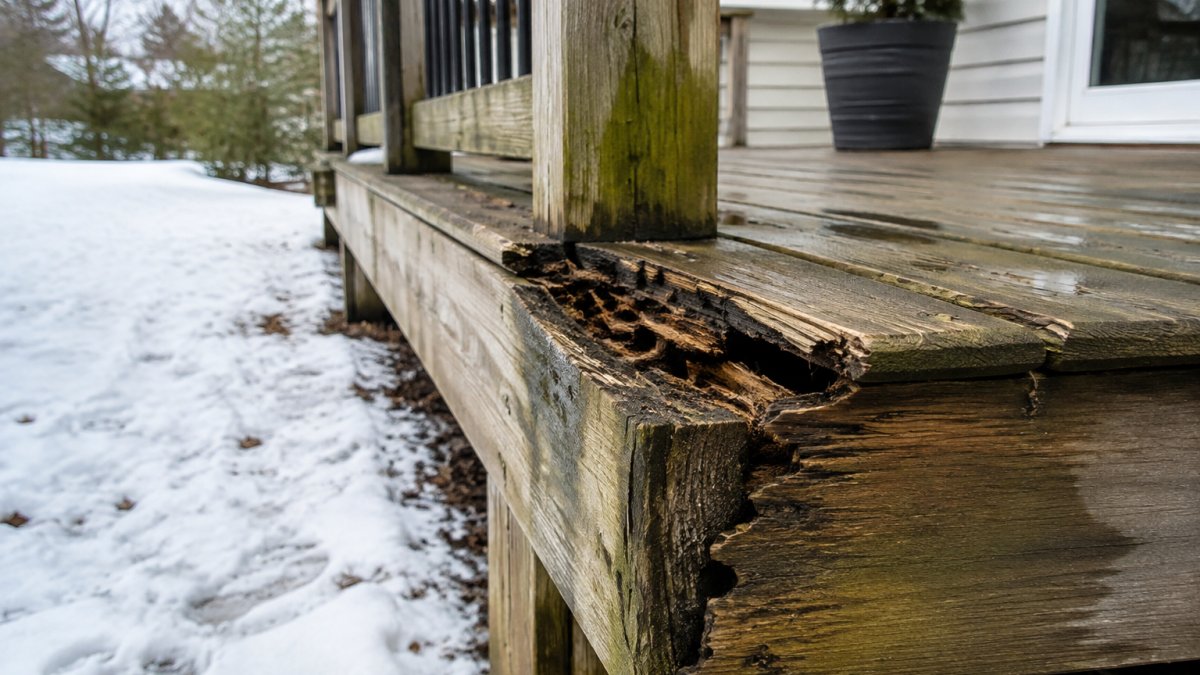
Preventing deck rot through harsh winters starts with a simple fact: decay needs moisture, and cold weather traps it. Over the years, wood decks often fail for one reason: water that never gets a chance to dry. A fall inspection and cleanup routine is your best defense against deck rot before the freeze sets in.
Run through this checklist before the first hard frost:
- Clear leaves, dirt, and debris from between deck boards
- Sweep and wash the surface with a deck cleaner
- Probe boards and railings for soft spots
- Tighten or replace loose fasteners
- Check that downspouts and drainage run water away from the deck
- Confirm ground clearance and airflow beneath the structure
- Remove planters, furniture, and anything trapping moisture
- Apply or refresh a water-repellent sealer
The boring steps matter most. Debris between boards holds standing water against the wood through every freeze-thaw cycle, feeding wood decay. Clear it out and you remove the fuel.
Want a step-by-step version you can follow on the deck itself? Use our preparing your deck for winter checklist as you work through each item above.
Run through these steps before the first hard frost to keep moisture from feeding deck rot all winter.
| Step | What to do |
|---|---|
| Clear debris | Remove leaves, dirt, and debris from between deck boards |
| Clean surface | Sweep and wash with a deck cleaner |
| Inspect wood | Probe boards and railings for soft spots |
| Fasteners | Tighten or replace loose fasteners |
| Drainage | Check downspouts and drainage run water away from deck |
| Airflow | Confirm ground clearance and airflow beneath the structure |
| Remove clutter | Remove planters, furniture, and anything trapping moisture |
| Seal | Apply or refresh a water-repellent sealer |
Sealing a Deck Before Winter: Timing and Conditions That Matter
Sealing a deck before winter works best when the wood is clean, dry, and the temperature stays within the sealer manufacturer’s stated range for application and curing. Apply too late and the coating won’t cure before freezing temperatures arrive.
Timing is where most DIY sealing jobs go wrong. A common mistake is sealing in cool, damp fall weather because the calendar says it’s time. Most water-repellent sealers need dry wood and air above a minimum temperature for a set window. Read the label, then watch the forecast.
Conditions to check before you seal:
Sealing protects against moisture, but it is not a repair. If boards are already soft or cracked, sealing locks the problem in. Fix the damage first.
Not sure the deck will survive another season, or don’t want to gamble on fall weather? Our team handles sealing and prep before the cold arrives, and you can contact us to book the work ahead of winter.
For a deeper look at keeping boards flat and stable through wet and cold cycles, our guide on how to prevent your deck from warping pairs well with sealing.
How to Remove Snow From a Deck Without Causing Damage
Removing snow from a deck safely means using a plastic shovel or broom, never a metal blade, and pushing snow with the grain of the boards rather than chopping at ice. The goal is to clear weight and moisture without gouging the wood or prying at fasteners.
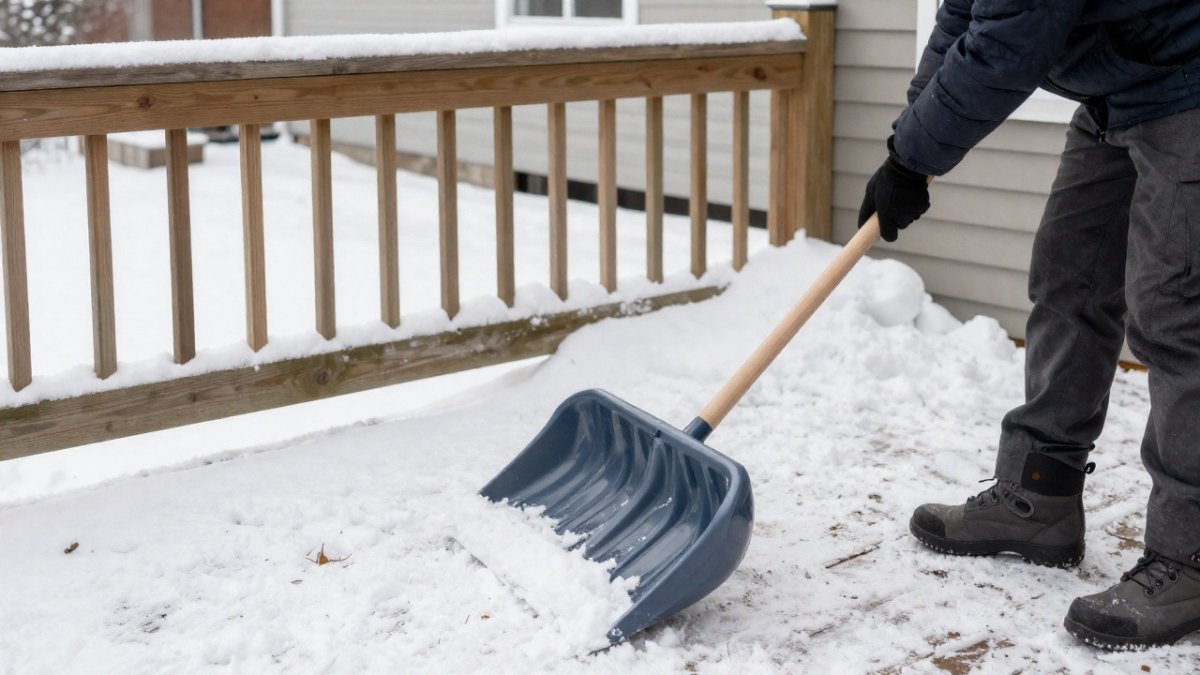
A few rules keep snow removal from turning into repair work:
Watch out: rock salt and abrasive ice melt tracked onto a wood deck can dry out and pit the surface over a season, showing up as splintering and loose fasteners by spring.
If snow and ice have already caused damage, or you suspect rot has set in, our deck construction and restoration service covers repairs and rebuilds. Once the thaw comes, run through our spring deck revival checklist to catch problems early.
Harsh winters punish wood decks, but the damage is rarely sudden. It builds quietly through trapped moisture, poor drainage, and skipped maintenance. Green Side Up Contracting Inc is a 11-time HomeStars winner, a professional member of Landscape Ontario, and an Authorized TrexPro Platinum Contractor, with 26 years of experience in custom decks and hardscaping. Get started with Green Side Up Contracting Inc and protect your deck before the next deep freeze.
Frequently Asked Questions
How do I prevent my deck from rotting in winter?
Remove leaves and dirt from between the boards in fall so water can drain, then seal the wood while temperatures are still mild enough for the product to cure. Through winter, clear snow with a plastic shovel, keep ice melt off the wood, and make sure air moves under the deck. Water sitting on or under the boards is what starts deck rot, so every step that improves drainage and airflow buys you years of service.
Should I seal a wood deck before winter?
Yes, sealing a deck before winter is the single most effective step for preventing deck rot. Apply a water-repellent sealer once the wood is clean and dry, and check the label for the minimum application temperature, since most products need a stretch of mild, dry weather to cure. A fresh coat stops meltwater and rain from soaking into the grain, which is where freeze-thaw damage begins.
Is it safe to use ice melt or rock salt on a wood deck?
Most ice melt products and rock salt are hard on wood, fasteners, and nearby plantings, so keep them off the deck surface. Clear snow promptly with a plastic shovel instead, and if ice forms, use sand or a small amount of abrasive grit for traction. Metal blades and de-icing salts both shorten the life of deck boards and speed up corrosion on fasteners.